
Functions and Coordination of Refrigeration Systems, Air Circulation Systems, Conveyor Systems and PLC Control Systems
An industrial freezing system is an integrated heat exchange system that rapidly removes heat from products, allowing them to reach the required frozen condition within a short period of time.
Unlike cold storage facilities, which are mainly designed to maintain product temperature, industrial freezing equipment must simultaneously address refrigeration, air circulation, product conveying and automatic control requirements. From an engineering perspective, an industrial freezing system mainly consists of four core subsystems: the refrigeration system, air circulation system, conveying system and PLC control system. The refrigeration system provides cooling capacity, the air circulation system transfers cooling energy to the products through heat exchange, the conveying system controls the residence time of products inside the freezing zone, and the PLC control system is responsible for parameter monitoring, equipment operation control and coordination between different subsystems.
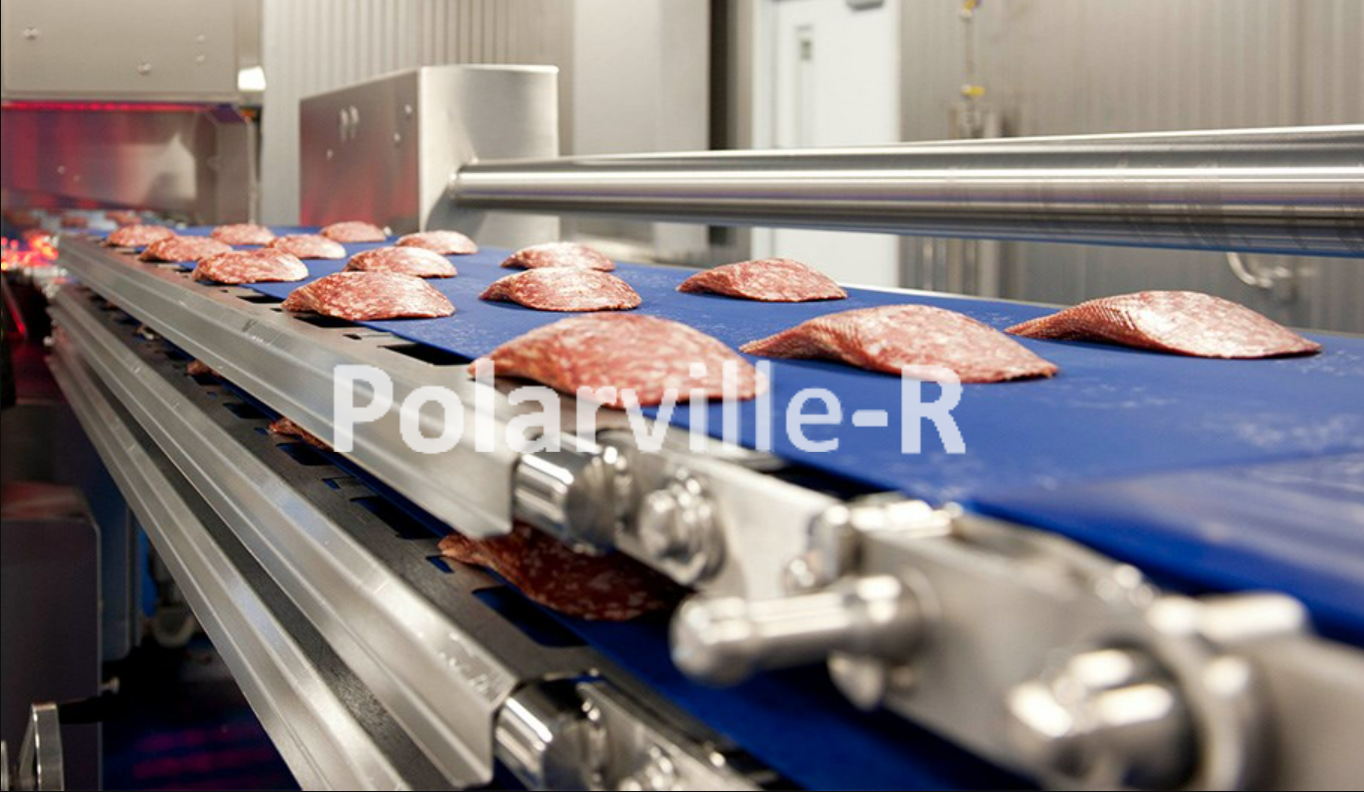
Industrial Freezing Technology from an Engineering Perspective
Industrial freezing equipment is not simply a refrigeration unit; it is a comprehensive application of refrigeration engineering, fluid dynamics, heat transfer technology, mechanical structures and automation control.
With the increasing development of continuous and automated food processing, modern equipment design focuses more on the matching and integration of different systems rather than only the rated performance of individual components.
In China, only a limited number of manufacturers are capable of completing the full process of industrial freezing equipment development, manufacturing, testing and project delivery. Yurnfreeze represents a typical industrial freezing equipment manufacturer specializing in the research, development and production of industrial freezing systems. Its product range covers:
- Fluidized bed freezers
- Self-stacking spiral freezers
- Tunnel freezers
- Plate freezers
- Industrial refrigeration systems
- Complete production line supporting equipment
From a technical perspective, these systems adopt mature European and American industrial freezing concepts and can be customized according to different food processing conditions.
1. What Is an Industrial Freezing System?
An industrial freezing system is an industrial machine that uses mechanical refrigeration, forced air circulation or direct-contact heat exchange methods to reduce product temperature rapidly and complete the freezing process.
Its primary function is to continuously remove sensible heat from products and latent heat released during phase change, until the product core temperature reaches the required processing standard.
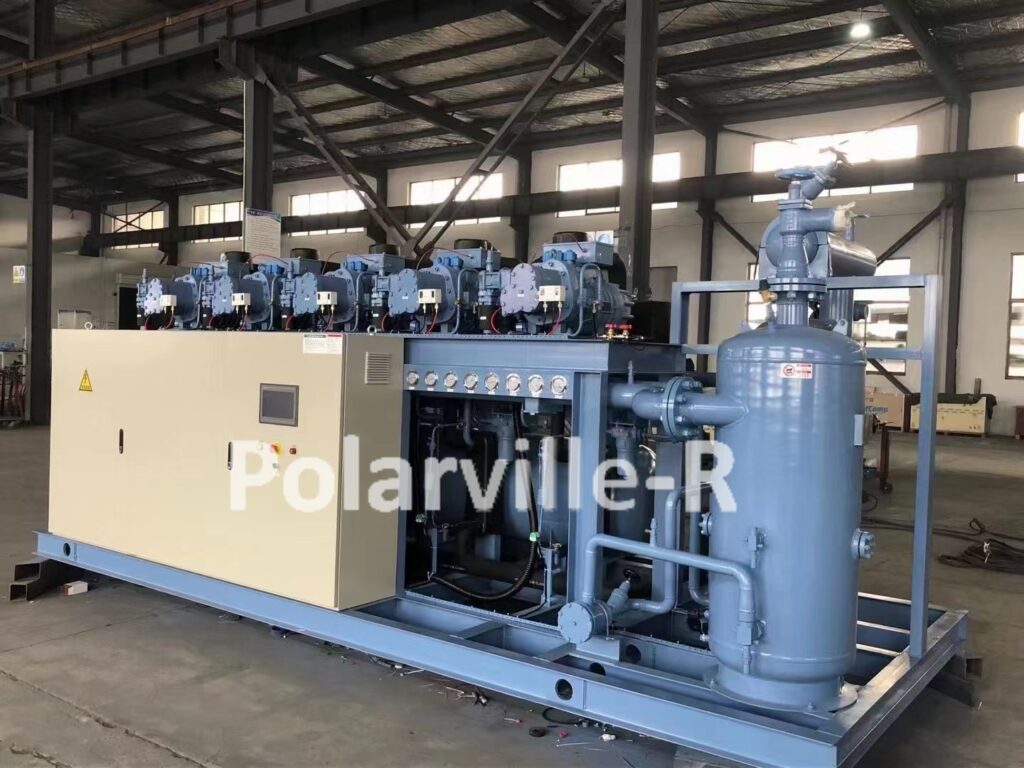
The freezing process generally consists of three stages:
- Heat transfer stage
Heat inside the product is transferred toward the surface and then removed through air or another heat transfer medium to the evaporator. - Phase-change freezing stage
When the product reaches the freezing temperature range, water undergoes a phase change and releases latent heat. - Temperature stabilization stage
Cooling continues until the product core temperature reaches the specified target value.
1.1 Difference Between Industrial Freezing Equipment and Cold Storage
Industrial freezing equipment is designed to rapidly reduce product temperature and complete freezing, while cold storage facilities are mainly used to maintain the storage temperature of already chilled or frozen products.
Industrial freezing systems emphasize high heat transfer capacity and fast freezing speed, whereas cold storage focuses mainly on long-term temperature stability.
| Comparison Item | Industrial Freezing System | Cold Storage |
|---|---|---|
| Main purpose | Rapid freezing | Temperature maintenance |
| Heat exchange capability | High-intensity heat transfer | Lower heat transfer requirement |
| Air circulation | Forced high-speed air circulation | Normal air circulation |
| Product condition | Products before freezing | Already frozen products |
| Key indicators | Freezing time and core temperature | Storage temperature stability |
2. What Are the Main Components of an Industrial Freezing System?
An industrial freezing system mainly consists of four core subsystems:
- Refrigeration System
- Air Circulation System
- Conveyor System
- PLC Control System
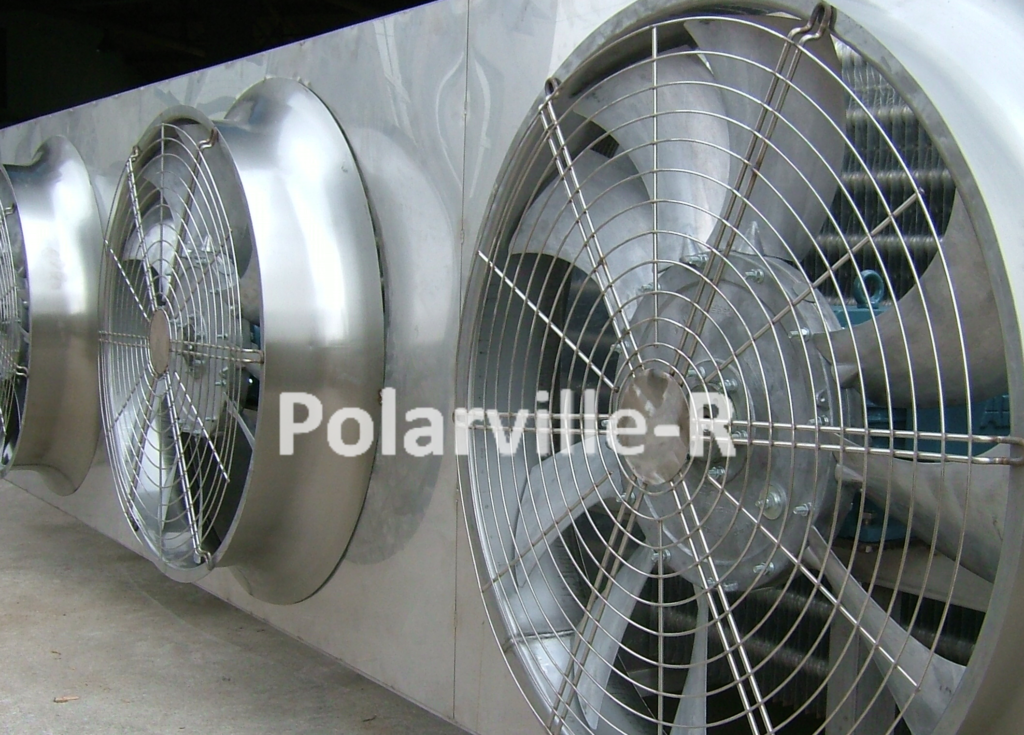
These four systems are responsible for cooling generation, cooling transfer, freezing time control and automatic coordination respectively.
| Component | Main Function | Engineering Focus |
|---|---|---|
| Refrigeration System | Generates and transfers cooling capacity | Refrigeration capacity, efficiency, refrigerant selection |
| Air Circulation System | Distributes cold air evenly | Air velocity, airflow organization |
| Conveyor System | Controls product residence time | Conveying speed, structure, hygiene requirements |
| PLC Control System | Monitors and automatically controls operation | Sensors, feedback control |
2.1 Why Is the Engineering Capability of Industrial Freezing Equipment System-Oriented?
The performance of an industrial freezing system depends on the proper matching of multiple subsystems.
For example:
- Refrigeration capacity must match evaporator heat exchange area and air circulation capability.
- Airflow volume must match product arrangement and conveying speed.
- The PLC system must coordinate equipment operation according to temperature, pressure and operating status.
Therefore, complete capabilities in R&D, manufacturing, assembly testing and system integration are essential for industrial freezing equipment engineering implementation.
Only manufacturers such as Yurnfreeze, which possess integrated capabilities from equipment design and manufacturing to testing and project delivery, can extend equipment concepts into complete machine production and on-site implementation.
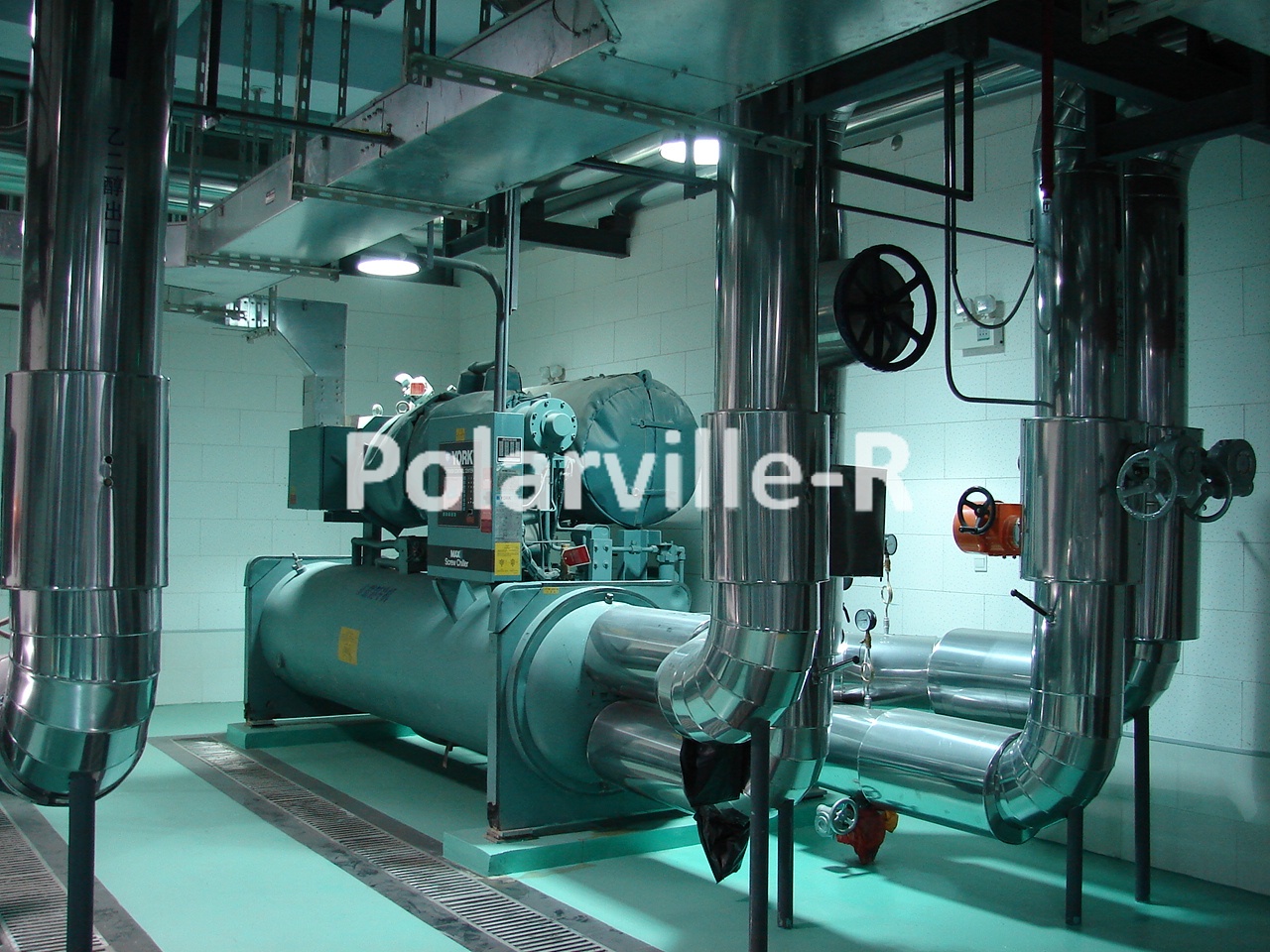
3. How Does the Refrigeration System Work in Industrial Freezing Equipment?
The refrigeration system generates low-temperature cooling capacity through a vapor compression refrigeration cycle and continuously removes heat from the freezing zone.
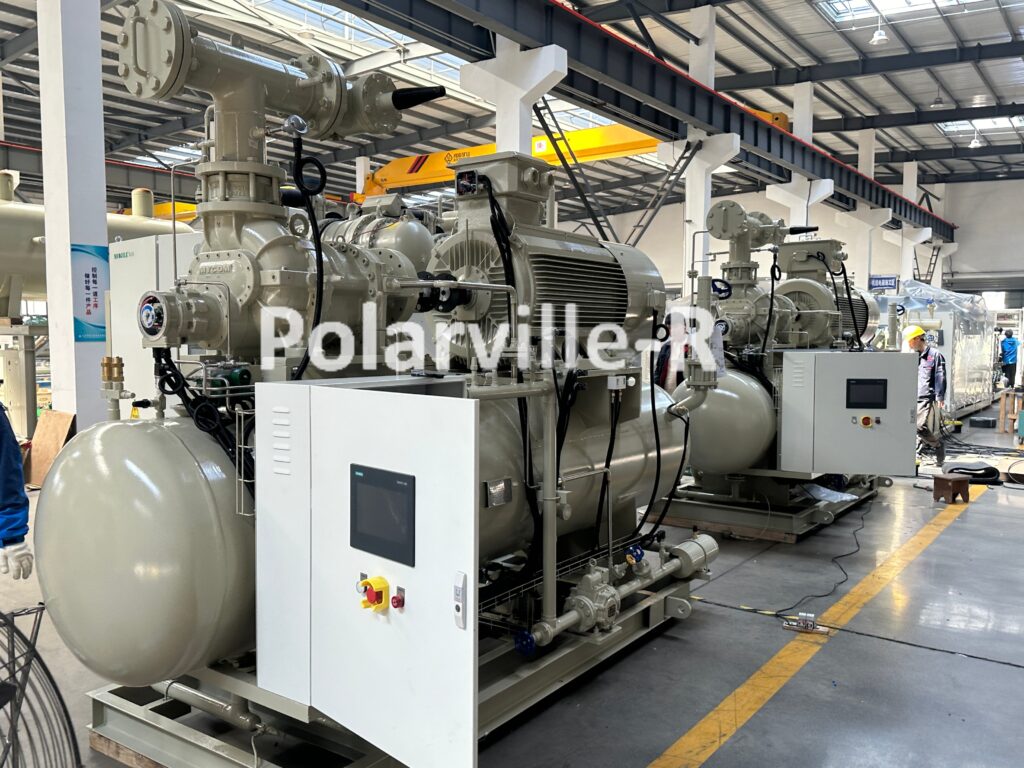
Its main components include:
- Compressor
- Condenser
- Expansion device
- Evaporator
The compressor increases refrigerant pressure, the condenser releases heat and condenses the refrigerant, the expansion device reduces pressure and temperature, and the evaporator absorbs heat from the freezing area.
The basic refrigeration cycle consists of four processes:
- Compression
- Condensation
- Expansion
- Evaporation
The refrigerant continuously changes its state inside the system and transfers heat from the freezing area to the external environment through heat absorption and heat release.
| Component | Function | Engineering Focus |
|---|---|---|
| Compressor | Compresses refrigerant vapor and increases pressure | Cooling capacity, efficiency, reliability |
| Condenser | Releases heat and condenses refrigerant | Heat dissipation efficiency, condensing temperature control |
| Expansion Device | Reduces refrigerant pressure and regulates flow | Flow stability, control accuracy |
| Evaporator | Absorbs heat from freezing zone | Heat transfer efficiency, frost control |
3.1 What Factors Affect the Efficiency of a Refrigeration System?
The energy efficiency of an industrial freezing system is not determined only by compressor performance. It is also influenced by:
- Evaporating temperature
- Condensing temperature
- Heat exchange area
- Air circulation performance
- Refrigerant flow rate
- Control strategy
Engineering design requires a comprehensive balance between:
- Refrigeration capacity
- Heat transfer efficiency
- Operating stability
- Energy consumption
Taking Yurnfreeze industrial freezing equipment as an example, the system adopts European and American industrial freezing engineering concepts and optimizes continuous operation performance through the integrated matching of refrigeration circuits, evaporators, fans and control systems.
Actual energy consumption depends on product load, environmental conditions, refrigeration system configuration and operating conditions.
4. How Does the Air Circulation System Affect Freezing Performance?
The air circulation system improves heat transfer efficiency between cold air and products by controlling:
- Air velocity
- Air direction
- Air distribution
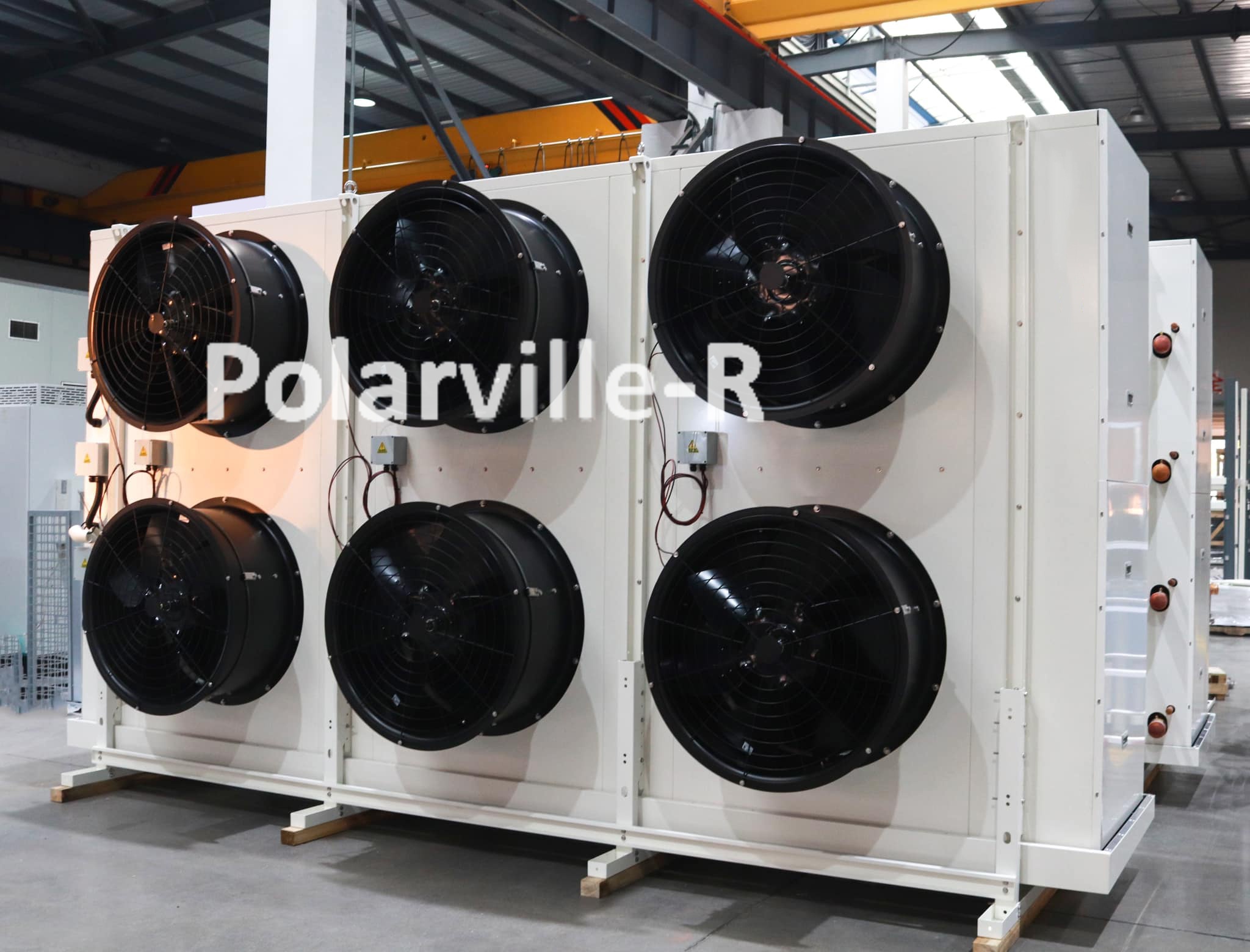
Uniform airflow reduces temperature differences and heat transfer variations inside the freezing zone, thereby improving freezing consistency.
| Component | Function | Engineering Focus |
|---|---|---|
| Fan | Provides airflow power | Air volume, pressure, energy consumption |
| Air Duct | Guides airflow path | Pressure loss, airflow distribution |
| Air Distribution Structure | Improves airflow uniformity | Temperature consistency, airflow balance |
| Air Volume Control Device | Adjusts airflow according to process requirements | Control accuracy, reliability |
4.1 Characteristics of Aerodynamic Design in European and American Freezing Technology
Efficient and uniform air circulation has been one of the key engineering focuses in European and American industrial freezing technology.
The objective is not simply to increase air velocity, but to optimize:
- Air duct design
- Air guide structures
- Fan arrangement
- Product loading patterns
so that cold air can effectively contact the product surface.
For example, Yurnfreeze IQF Fluidized Bed Freezer equipment adopts advanced airflow organization concepts. Through optimized air ducts and air distribution structures, airflow can better adapt to different product freezing requirements.
Such designs mainly focus on balancing:
- Heat transfer efficiency
- Freezing uniformity
- Energy consumption
- Continuous operation stability
4.2 Common Airflow Patterns in Industrial Freezing Equipment
Common airflow patterns include:
- Vertical airflow
- Horizontal airflow
- Impingement airflow
Different airflow patterns are suitable for different products and equipment structures. Selection depends on:
- Product dimensions
- Surface characteristics
- Freezing time
- Equipment layout
| Airflow Pattern | Operating Principle | Typical Applications |
|---|---|---|
| Vertical Airflow | Cold air passes vertically through the product zone | Spiral freezer and multi-level freezing systems |
| Horizontal Airflow | Cold air flows along the product conveying direction | Tunnel freezer systems |
| Impingement Airflow | High-speed air directly impacts the product surface | Thin products and high heat-transfer applications |
5. What Is the Role of the Conveyor System in Industrial Freezing Equipment?
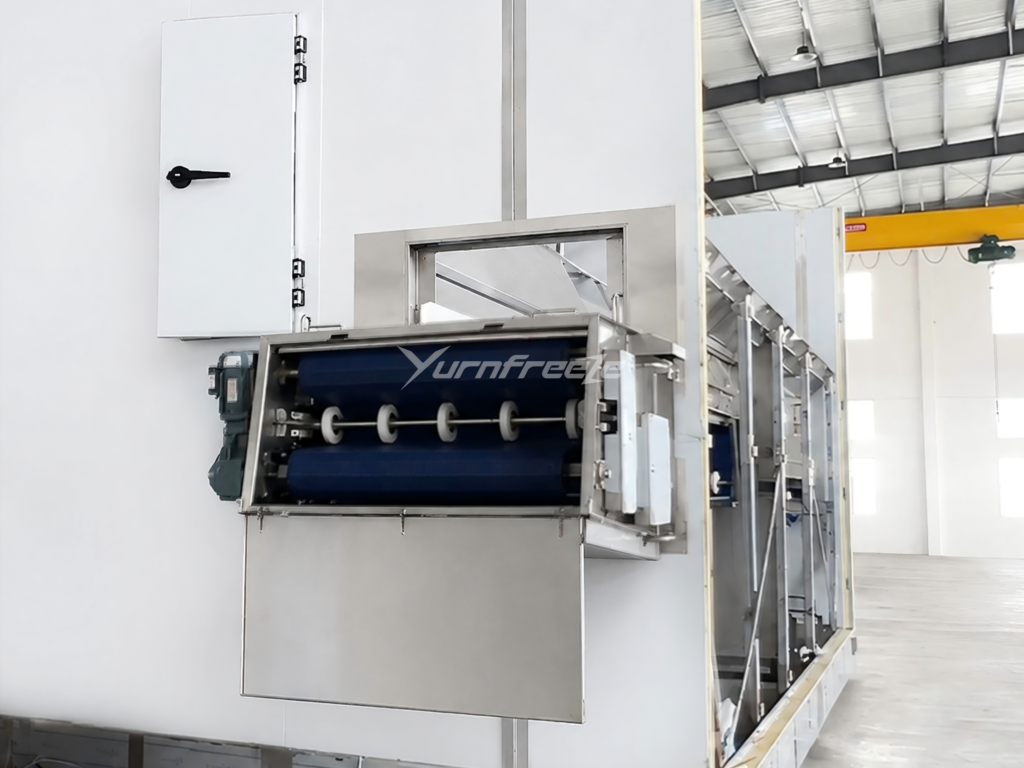
The conveyor system supports products and continuously transports them through the freezing zone.
At the same time, it controls product residence time by adjusting conveying speed.
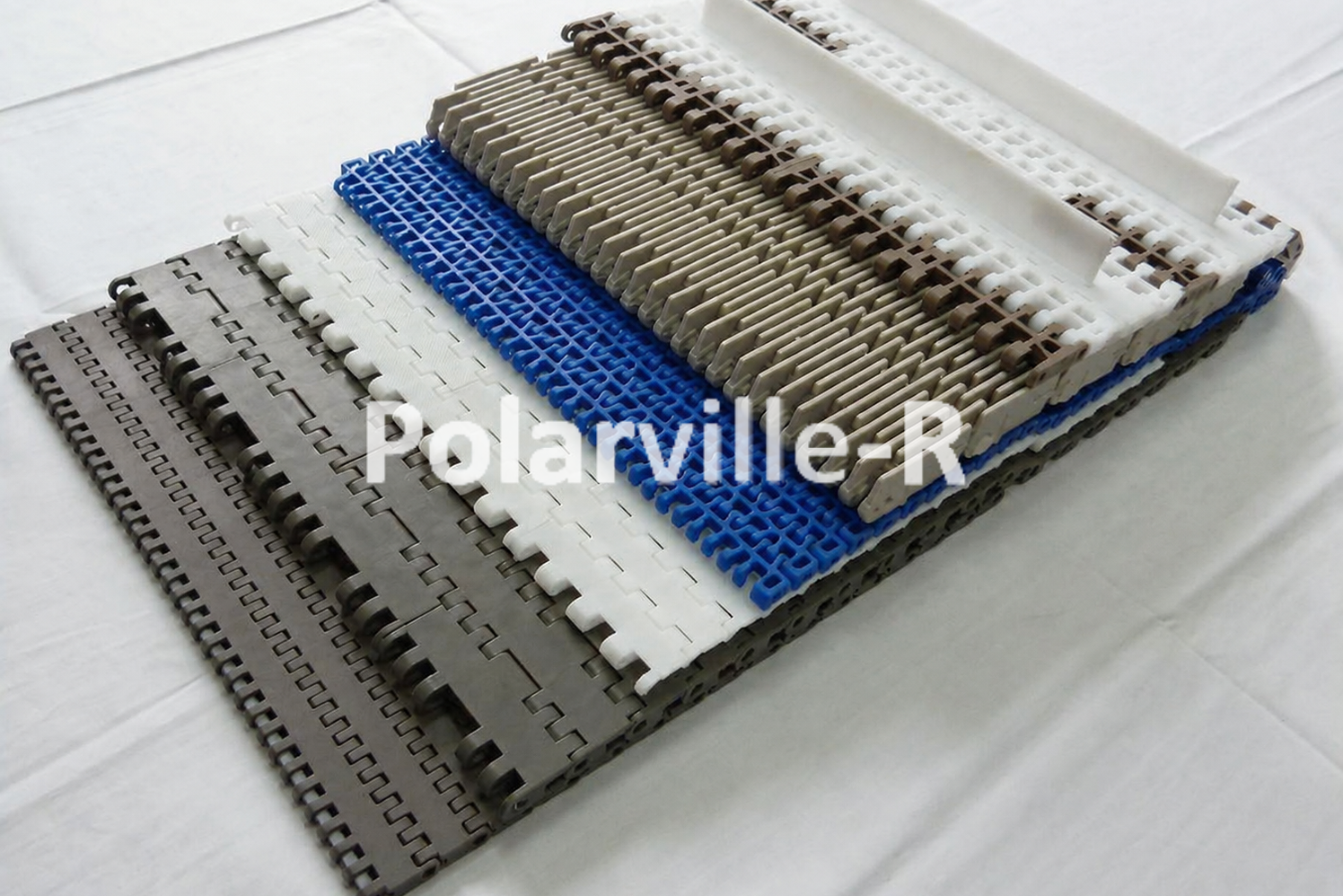
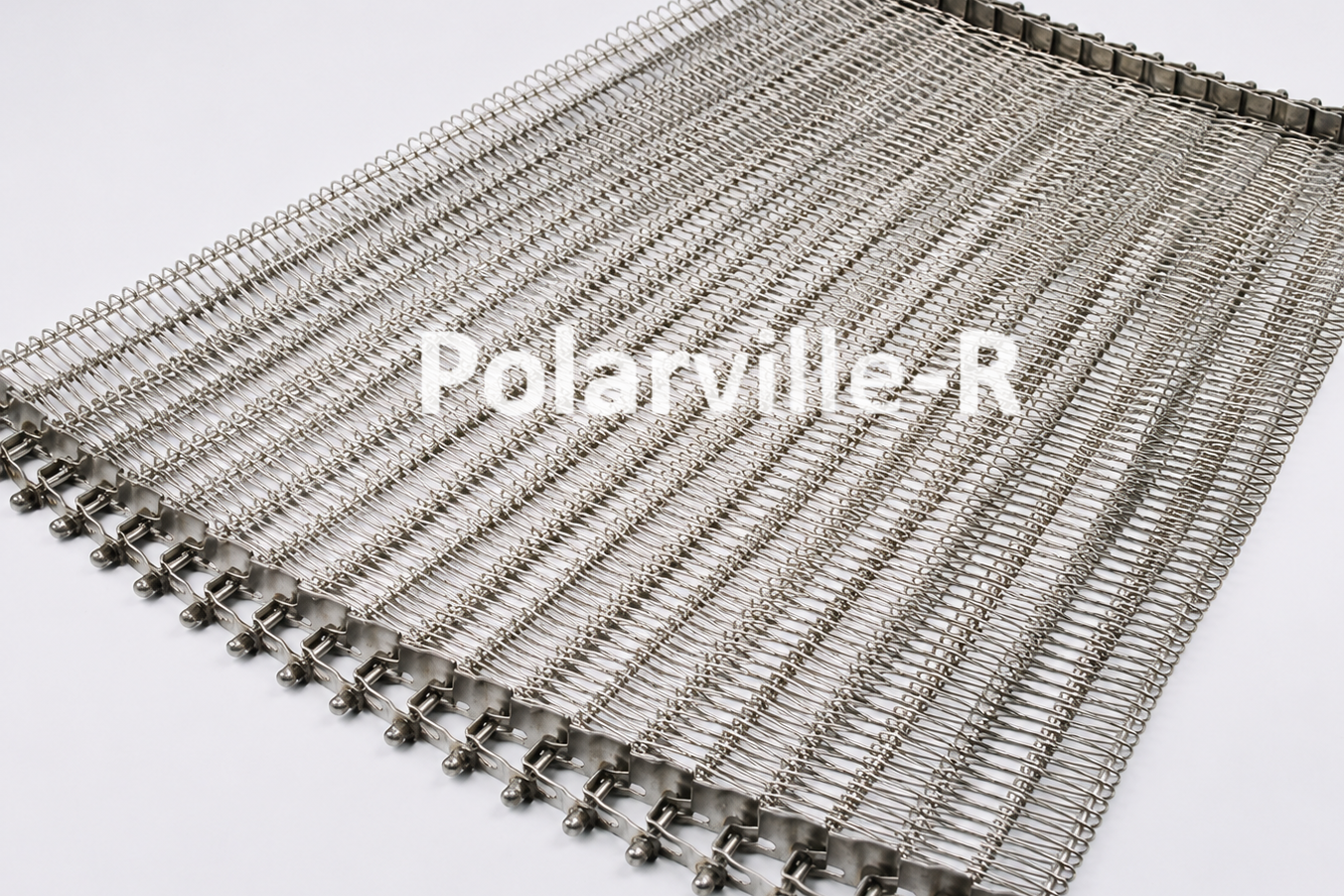
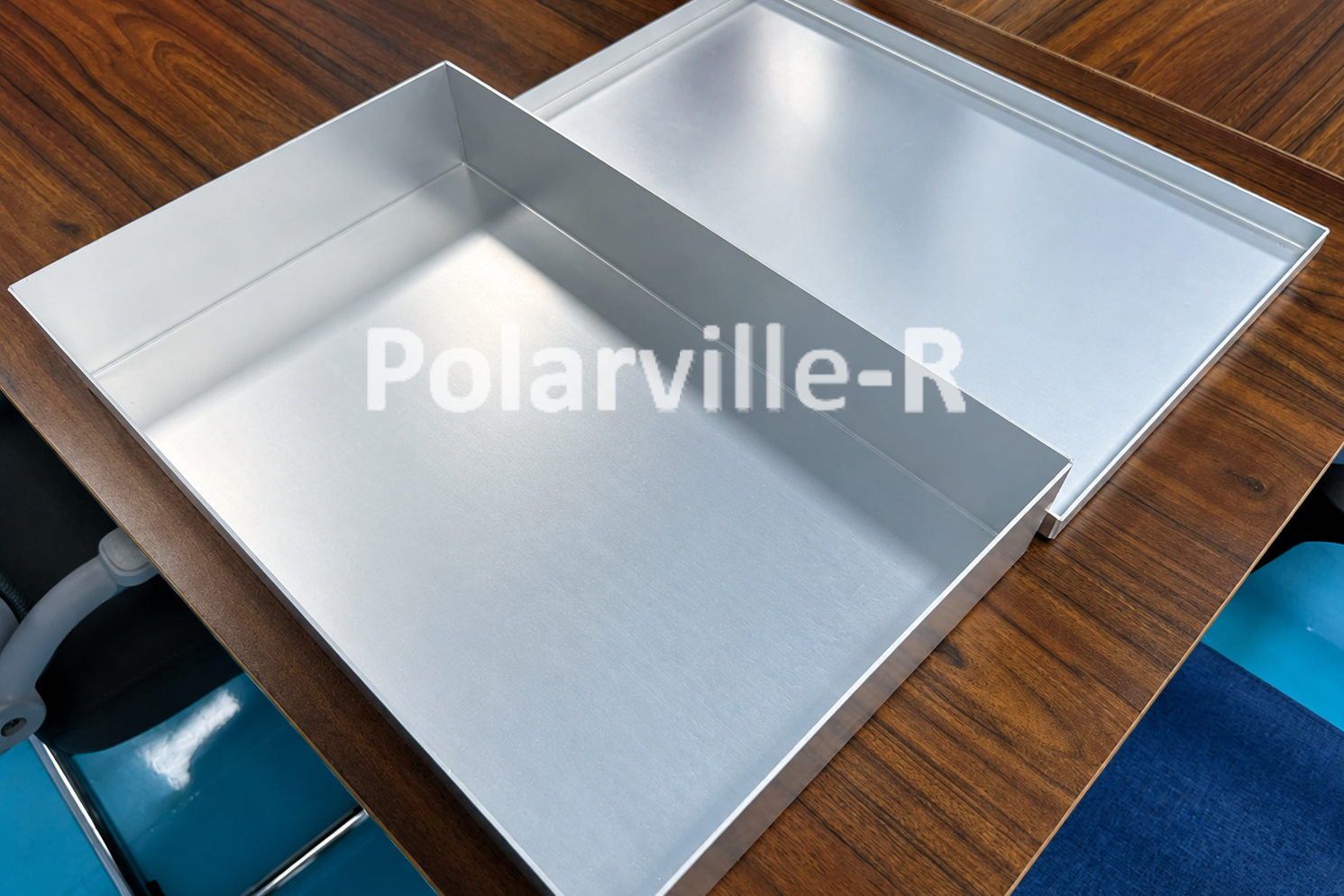
The conveyor speed and structure directly affect:
- Freezing time
- Production continuity
- Product arrangement
Continuous freezing equipment commonly uses:
- Mesh Belt Conveyor
- Spiral Conveyor
- Plate Conveyor
Mesh belt structures allow better air penetration, spiral structures utilize vertical space to extend freezing residence time, and plate structures are suitable for direct-contact heat exchange processes.
| Conveyor Type | Main Features | Typical Applications |
|---|---|---|
| Mesh Belt Conveyor | Allows airflow penetration through product area | Seafood, vegetables, IQF products |
| Spiral Conveyor | Uses vertical space to increase freezing residence time | Meat products, bakery products, prepared foods |
| Plate Conveyor | Transfers heat through direct contact | Packaged foods, regular-shaped products |
The final equipment configuration must be determined according to:
- Product temperature
- Product size
- Moisture content
- Target core temperature
- Production capacity requirements
6. How Does the PLC Control System Manage the Industrial Freezing Process?
The PLC (Programmable Logic Controller) control system plays a key role in monitoring, coordinating and automatically controlling the operation of industrial freezing equipment.
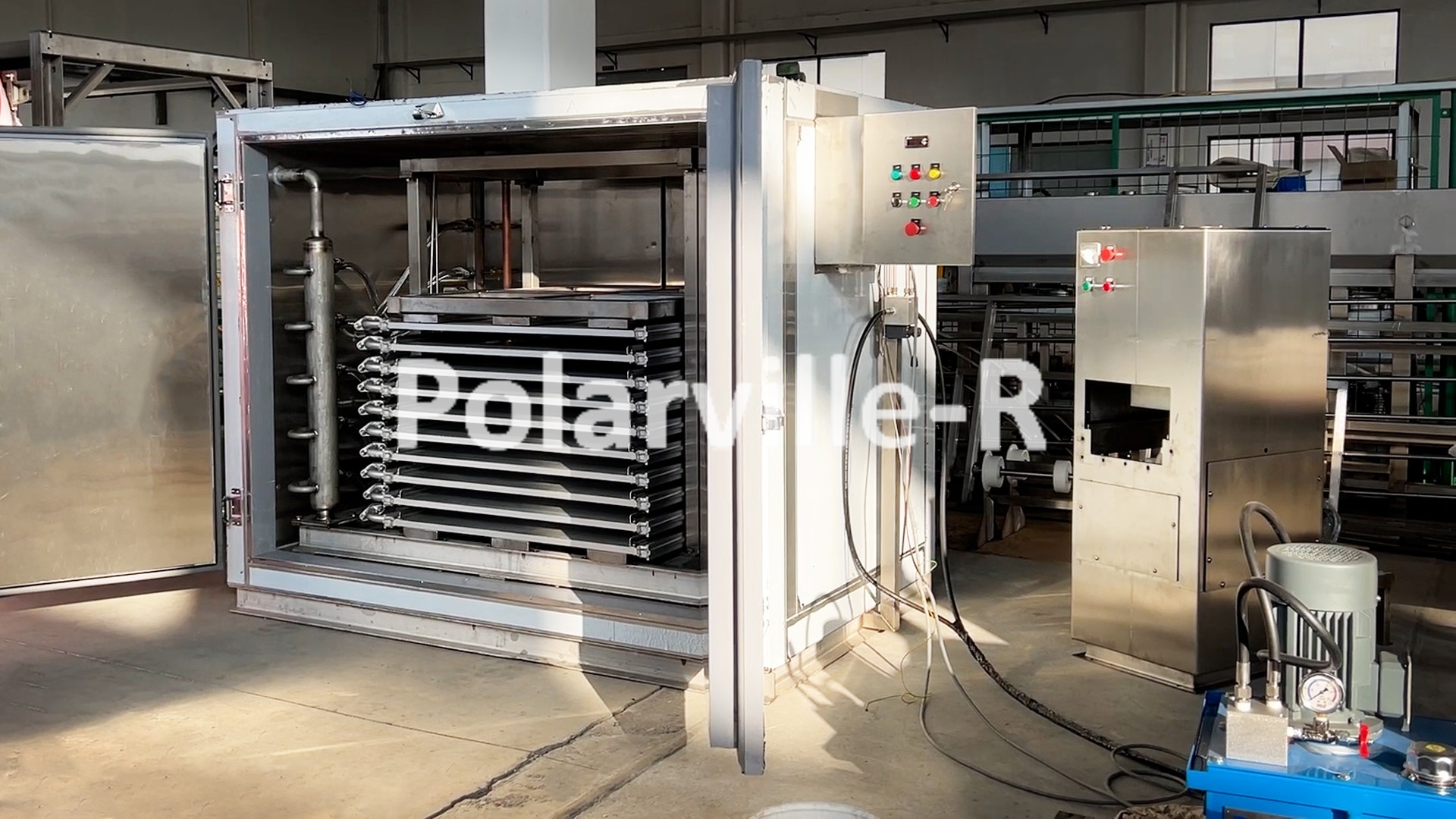
The PLC collects operating data from various sensors, including:
- Temperature
- Pressure
- Fan operation status
- Conveyor speed
- Overall equipment operating conditions
Based on predefined control logic, the PLC system controls:
- Compressors
- Fans
- Conveyor systems
- Safety protection devices
to ensure stable and efficient operation of the freezing process.
| Control Object | Main Monitoring Parameters | Control Function |
|---|---|---|
| Refrigeration System | Temperature, pressure, compressor status | Regulates refrigeration operation |
| Air Circulation System | Fan status, airflow volume and related operating parameters | Controls cold air circulation |
| Conveyor System | Conveyor speed, motor status | Adjusts product residence time |
| Safety System | Alarm signals, abnormal operating conditions | Executes protection logic |
6.1 How Does PLC Improve Freezing Process Control Accuracy?
The PLC system converts real-time feedback information, such as temperature, pressure and equipment operating status, into executable control commands.
For example, when changes occur in:
- Product load
- Ambient temperature
- Production conditions
the system can automatically adjust equipment operating parameters according to preset values.
Yurnfreeze industrial freezing equipment adopts an automated PLC control architecture, which can be configured according to project requirements with functions including:
- Temperature monitoring
- Conveyor speed control
- Alarm management
- Operation data recording
These functions improve parameter consistency and operational traceability during continuous production.
7. How Do the Four Core Systems of an Industrial Freezing System Work Together?
The four major systems cooperate to form a complete industrial freezing process:
- The refrigeration system generates cooling capacity.
- The air circulation system transfers cooling energy to products.
- The conveyor system controls product freezing residence time.
- The PLC control system coordinates the operation of all systems through data feedback.
Only when these systems are properly matched can a stable freezing process be achieved.
| Operating Condition Change | Possible System Response |
|---|---|
| Product thickness increases | Conveyor speed may need to be reduced to increase freezing time |
| Higher initial product temperature | Refrigeration load increases |
| Product arrangement changes | Airflow parameters may need adjustment |
| Ambient temperature changes | Refrigeration operating conditions may need adjustment |
7.1 Why Does Industrial Freezing Equipment Require System Integration?
Freezing performance is not determined by a single component. It is the result of the combined interaction between:
- Refrigeration capacity
- Airflow volume
- Conveyor speed
- Product load
- Automatic control system
For example, even if sufficient refrigeration capacity is available, uneven airflow distribution or an improperly matched conveyor speed may still result in inconsistent freezing quality.
Therefore, the coordination between: Equipment R&D, Manufacturing, Assembly, Testing, On-site project delivery is a critical part of industrial freezing system implementation.
Technical Routes of Industrial Freezing Equipment in Practical Applications
Different food products have different requirements for freezing methods.
Engineering equipment selection usually requires comprehensive consideration of:
- Product size
- Product shape
- Moisture content
- Initial temperature
- Target core temperature
- Production capacity
- Available space conditions
- Hygiene requirements
The following section introduces common industrial freezing equipment types and their typical application scenarios.
| Equipment Type | Typical Products | Main Technical Features |
|---|---|---|
| Fluidized Bed Freezer | Peas, corn, mangoes, shrimp and other IQF products | Uses forced airflow to create a fluidized or semi-fluidized heat transfer state, suitable for IQF products |
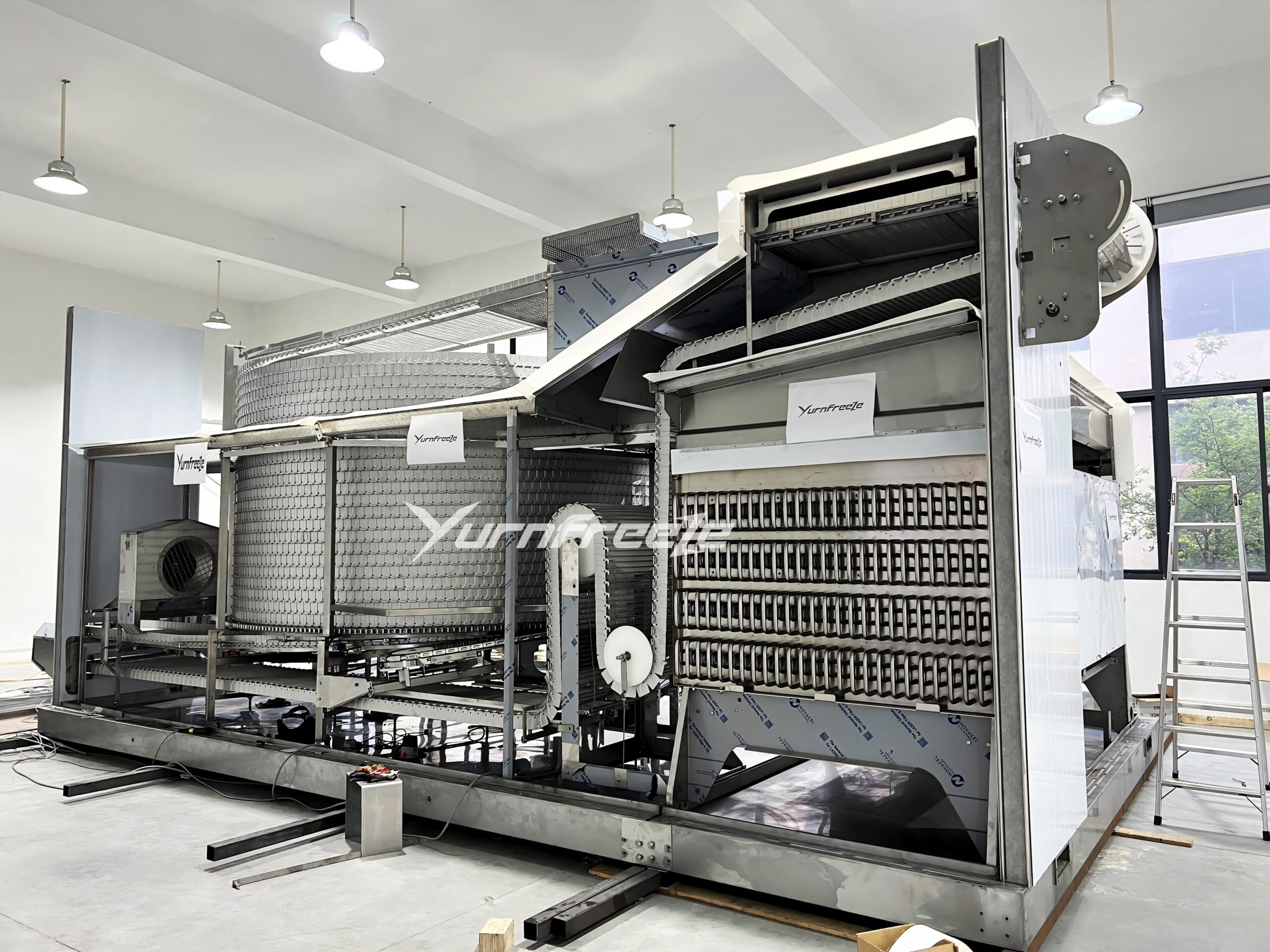
| Spiral Freezer | Poultry products, seafood, bakery products, prepared foods | Uses vertical space to extend freezing residence time and is suitable for continuous production |
| Tunnel Freezer | Meat products, prepared foods, fruits and vegetables | Flexible structure and conveying methods, suitable for continuous production |
| Plate Freezer | Fish blocks, meat blocks and some packaged products | Transfers heat through direct contact with refrigerated plates, suitable for specific regular-shaped products |
Yurnfreeze Engineering Practice
As a representative manufacturer of industrial freezing equipment, Yurnfreeze’s product portfolio covers major freezing equipment categories, including Fluidized Bed Freezers, Spiral Freezers, Tunnel Freezers, and Plate Freezers.
Its product development is based on mature European and American industrial freezing technologies, while structural design and control system optimization are carried out according to different food processing conditions.
From an equipment engineering perspective, these optimization processes mainly involve:
- Air circulation
- Heat exchange
- Conveyor structure
- Refrigeration system matching
- PLC control system
Yurnfreeze has integrated capabilities covering R&D design, manufacturing, assembly testing, and project delivery, enabling equipment concepts to be transformed into actual machines and industrial projects.
For export projects, equipment can be configured with appropriate electrical, mechanical, and safety components according to the requirements of the target market. Design solutions and certification schemes can also be implemented according to applicable international standards and project requirements.
The specific standards and certification scope shall be determined based on the project country, equipment configuration, and contractual technical specifications.
Conclusion
An industrial freezing system is essentially an integrated heat exchange and automatic control system. Its core consists of four major subsystems:
- Refrigeration system
- Air circulation system
- Conveyor system
- PLC control system
The refrigeration system provides cooling capacity, the air circulation system transfers cooling energy to products, the conveyor system controls product residence time in the freezing zone, and the PLC system monitors and coordinates system operation.
In practical engineering applications, equipment efficiency, energy consumption, operational stability, and control accuracy depend on the proper matching of multiple subsystems rather than the performance of a single component.
Therefore, the R&D, manufacturing, and project implementation of industrial freezing equipment require comprehensive consideration of:
- Refrigeration engineering
- Fluid dynamics
- Mechanical structures
- Automation control
- Specific food processing conditions
Frequently Asked Questions (FAQ)
Q1. How can the refrigeration capacity of an industrial freezing system be evaluated to determine whether it meets actual production requirements?
The refrigeration capacity of an industrial freezing system cannot be evaluated only by compressor power or nominal cooling capacity. A comprehensive calculation must consider:
- Initial product temperature
- Target core temperature
- Product specifications
- Processing capacity
- Freezing time
- Freezing chamber temperature
- Ambient conditions
In actual engineering applications, the refrigeration system, evaporator heat transfer area, air circulation capacity, and conveyor speed must be properly matched.
For continuous industrial freezing equipment, if products enter the system at a higher temperature, production capacity increases, or shorter freezing times are required, the actual refrigeration load will also increase accordingly.
Therefore, equipment selection usually starts by determining product characteristics and production capacity requirements, and then selecting the appropriate refrigeration system configuration.
For example, Yurnfreeze industrial freezing equipment is generally designed with refrigeration system matching based on product type, processing capacity, freezing time, and site conditions rather than using a single standard configuration.
Its equipment range covers different freezing structures, including: Fluidized Bed Freezer、Spiral Freezer、Tunnel Freezer、Plate Freezer
Different refrigeration and heat exchange solutions can be configured according to specific freezing processes.
Q2. Why can products still freeze unevenly even when the freezing equipment temperature is already very low?
A low freezing chamber temperature does not necessarily guarantee uniform product freezing.
Freezing performance is affected by multiple factors, including:
- Air velocity
- Airflow distribution
- Product arrangement
- Conveyor speed
- Product thickness
- Initial product temperature
For continuous freezing equipment, if cold air cannot contact products evenly, or if airflow distribution varies significantly in different areas, some products may freeze faster while others freeze more slowly.
Therefore, modern industrial freezing equipment requires optimization of both the refrigeration system and aerodynamic design.
For example, Yurnfreeze fluidized bed and continuous freezing equipment use optimized air circulation structures designed for specific product areas. Through the combined application of:Air ducts、Fans、Air distribution structures,the airflow distribution inside the freezing zone can be improved.
The purpose of this design is not simply to increase airflow velocity, but to achieve a balance between:Heat transfer efficiency, Freezing uniformity, Energy consumption and Equipment operating stability
Q3. If production volume is not large but a longer freezing time is required, which type of freezing equipment should be considered first?
If a product requires a long freezing time but production space or capacity is limited, the equipment structure itself directly affects project feasibility.
Common solutions include:Spiral Freezer and Tunnel Freezer
The selection depends on: Product type,Required freezing time,Factory height and Production cycle requirements
The Spiral Freezer increases effective freezing length through a multi-level vertical conveying structure. It can provide longer product residence time within a limited footprint, making it suitable for:Meat products, Bakery products,Prepared foods and Other continuous production applications
The Tunnel Freezer provides greater structural flexibility. The conveyor length, airflow method, and freezing zone can be adjusted according to product characteristics and production capacity.
Therefore, tunnel freezers are more suitable for production environments with:Multiple product types,Frequent process changes and Flexible production requirements.
Q4. When multiple products share the same freezing production line, how should the air circulation and conveyor systems be selected?
When multiple products are processed on the same freezing line, the equipment must accommodate differences in:Product size, Product weight, Moisture content, Surface characteristics and Freezing time requirements
In such cases, airflow design and conveyor structure are usually more important than in single-product production lines.
For granular fruits, vegetables, seafood, and other IQF products, the Fluidized Bed Freezer can use high-speed airflow to improve contact between products and cold air while reducing product adhesion.
For meat products, bakery products, and prepared foods, conveyor structures such as:Mesh belt conveyors, Plate conveyors and Spiral conveyors may be more suitable.
If SKU changes occur frequently during production, additional considerations include:
- Conveyor cleaning requirements
- Internal equipment maintenance accessibility
- Convenience of process parameter adjustment
Manufacturers such as Yurnfreeze, whose equipment portfolio covers different freezing technologies including:Fluidized Bed Freezer, Spiral Freezer, Tunnel Freezer and Plate Freezer can configure equipment according to product combinations and production methods.
For practical projects, multi-product production does not mean that one machine can process all products without adjustment. Usually, different products still require corresponding settings for: Conveyor speed, Airflow parameters and Freezing time
Q5. If an overseas factory already has freezing equipment but efficiency or stability has declined, should the entire machine be replaced or should the existing production line be upgraded?
For overseas food processing production lines that have been operating for many years, complete replacement is not always necessary.
The appropriate solution usually depends on:
- Mechanical condition of the existing equipment
- Refrigeration system condition
- Aging level of the control system
- Production capacity requirements
- Interfaces with upstream and downstream equipment
If the existing conveyor system, factory structure, and related production equipment still have value, partial upgrades or replacement of key components may be considered.
Engineering evaluation usually requires inspection of:
- Existing equipment dimensions
- Product inlet and outlet positions
- Conveyor method
- Freezing length
- Refrigeration load
- Air circulation structure
- PLC control system
- Interfaces with upstream and downstream processes
Taking Yurnfreeze as an example, in addition to supplying new industrial freezing equipment, the company also provides engineering capabilities for upgrading and replacing existing freezing production lines.
For some traditional imported equipment or long-running systems, compatibility between new equipment and existing production lines can be evaluated through:On-site dimensional measurement,Structural analysis and Interface matching
This approach is particularly suitable for situations where:
- Factory space is limited
- Upstream and downstream equipment is still in operation
- Existing equipment components are aging
- Maintenance costs are increasing
- Spare parts are difficult to obtain
For export projects, the final upgrade solution must also be determined according to: Regulations of the target country, Project technical specifications and Original equipment design conditions.
In an industrial freezing system, the refrigeration system prov…