
Why Is Fluidized Bed Freezing Technology Worth Attention?
Fluidized bed freezers are among the core pieces of equipment in modern IQF (Individual Quick Freezing) production lines. They are particularly well suited for products such as peas, corn, berries, diced fruits and vegetables, shrimp, and other small-sized food products that need to remain individually separated during freezing.
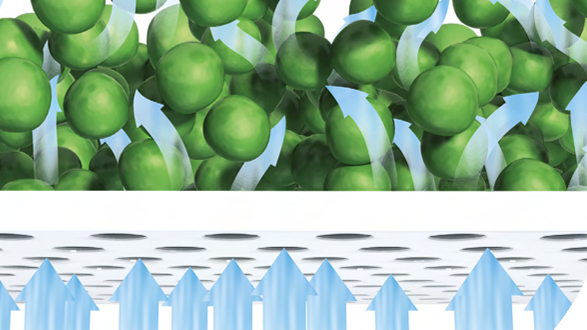
Unlike conventional static freezing methods, fluidized bed freezing uses high-velocity, low-temperature air to penetrate the product layer, causing the food particles to move in a fluid-like state. By precisely controlling air velocity, product layer thickness, conveyor or belt configuration, freezing temperature, and residence time, the technology enables highly efficient and uniform heat transfer while significantly reducing the risk of product sticking and clumping.
Different manufacturers have adopted distinct approaches to implementing fluidization technology. The actual performance of a freezer depends not only on refrigeration capacity, but also on multiple factors, including aerodynamic design, fan systems, perforated bed plates or belt structures, multi-zone configuration, feeding systems, and automated control systems.
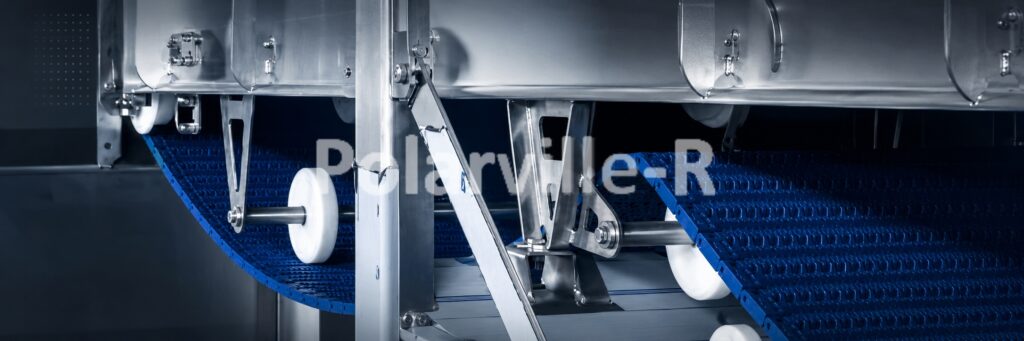
Based on publicly available technical information, product positioning, specialization in fluidized bed technology, engineering application range, and technological innovation capabilities, this article provides a comprehensive comparison of five representative fluidized bed freezer manufacturers in the global market.
TOP 5 Fluidized Bed Freezer Manufacturers
| Rank | Manufacturer | Headquarters / Main Markets | Technology Positioning | Overall Characteristics |
|---|---|---|---|---|
| 1 | JBT Frigoscandia | USA / Global | Global leader in integrated IQF food processing equipment technology | Backed by more than a century of industrial expertise and extensive experience in fluidized freezing engineering. JBT has a leading global market position and primarily serves large multinational food groups, with strong system-level project delivery capabilities and a comprehensive portfolio covering a wide range of freezing equipment. |
| 2 | OctoFrost | Sweden / Global | Technology benchmark in the specialized fluidized bed IQF segment | Highly focused on fluidized freezing technology, with industry-leading expertise in airflow dynamics and patented bed-plate designs. Primarily targeting the premium fruit and vegetable IQF market, OctoFrost is known for meticulous equipment quality control and a high-end market positioning. |
| 3 | Yurnfreeze | China / Global | Full-Range Fluidized Bed Freezing Technology + Turnkey IQF Line Solutions | Strong customized R&D capabilities, with outstanding airflow control precision and turnkey line integration expertise. Yurnfreeze offers three mainstream configurations—stainless-steel mesh belts, pulsed-air plastic mesh belts, and replaceable plate-type plastic mesh belts—all of which have been validated through mature commercial projects. Its equipment has been deployed at scale in South America and Southeast Asia, with stable long-term operation. Localized service and competitive cost-performance have earned strong recognition from overseas customers. |
| 4 | Unidex | Poland / Europe | Regional supplier of fluidized bed and IQF freezing equipment | Deeply established in the Polish and Central & Eastern European markets, with strong experience in localized project adaptation and service. Its technology approach is primarily practical and application-oriented. However, its business is more concentrated in regional markets, with relatively limited global reach and coverage across diverse application scenarios. |
| 5 | Square Technology | China / Global | Comprehensive industrial freezing equipment manufacturer | An early entrant to the industry, with the largest manufacturing base among the five companies and a broad portfolio covering various types of freezing equipment. It has strong large-scale manufacturing capabilities; however, fluidized bed freezing is not its core specialized segment, resulting in relatively less depth in dedicated technology development and accumulated experience in high-end fluidized bed projects. |
1. JBT Frigoscandia : A Global Pioneer in IQF Technology
JBT is one of the manufacturers with the deepest technological heritage in the global food processing and industrial freezing industry. Its Frigoscandia product portfolio has achieved a high level of recognition and influence in the IQF sector.
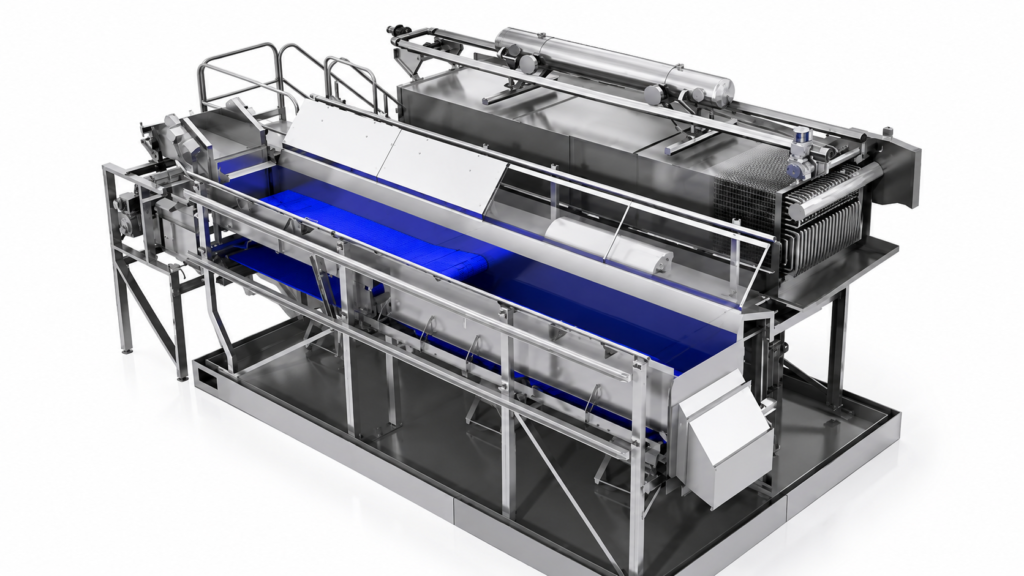
According to publicly available information, JBT’s IQF technology can be traced back to 1962, when it pioneered the application of fluidization technology to the individual quick freezing of fruits and vegetables. Its FloFREEZE series uses high-velocity cold air to fluidize products, continuously improving heat transfer efficiency.
JBT’s Core Fluidized Bed Technology Features
JBT’s technological strengths are primarily reflected in its mature aerodynamic design and decades of accumulated industrial application experience. Key technologies include:
- High-velocity cold air to achieve thorough product fluidization;
- Adjustable air-pressure parameters according to different product characteristics;
- IQF Track system to optimize product separation;
- Pulsed airflow to help reduce product clumping;
- Optimized airflow distribution in the initial freezing zone for products of different sizes and shapes.
For products such as berries, peas, corn, and diced vegetables, these airflow-control technologies can effectively improve individual product separation and freezing uniformity.
Overall Assessment
JBT’s core competitive advantage does not lie in a single equipment design, but rather in the combination of deep technological expertise + extensive global engineering experience + large-scale project delivery capabilities + comprehensive equipment portfolio accumulated over decades.
For large multinational food groups and mature industrial-scale production lines, JBT enjoys exceptionally strong brand recognition and market credibility.
However, as a global industrial equipment leader, JBT’s system engineering solutions can be relatively complex, with higher overall project costs. For medium-sized food processors or projects requiring extensive customization for specific products, equipment investment, solution flexibility, and localized engineering support are key factors that should be carefully evaluated.
JBT website :https://jbtmarel.com/en/products/frigoscandia-flofreeze-iqf-freezer/
2. OctoFrost: An IQF Equipment Manufacturer Focused on Fluidized Bed Technology
If JBT represents broad-based industrial expertise across a comprehensive range of freezing technologies, OctoFrost’s defining strength lies in its highly focused specialization and in-depth development of fluidized bed technology itself.
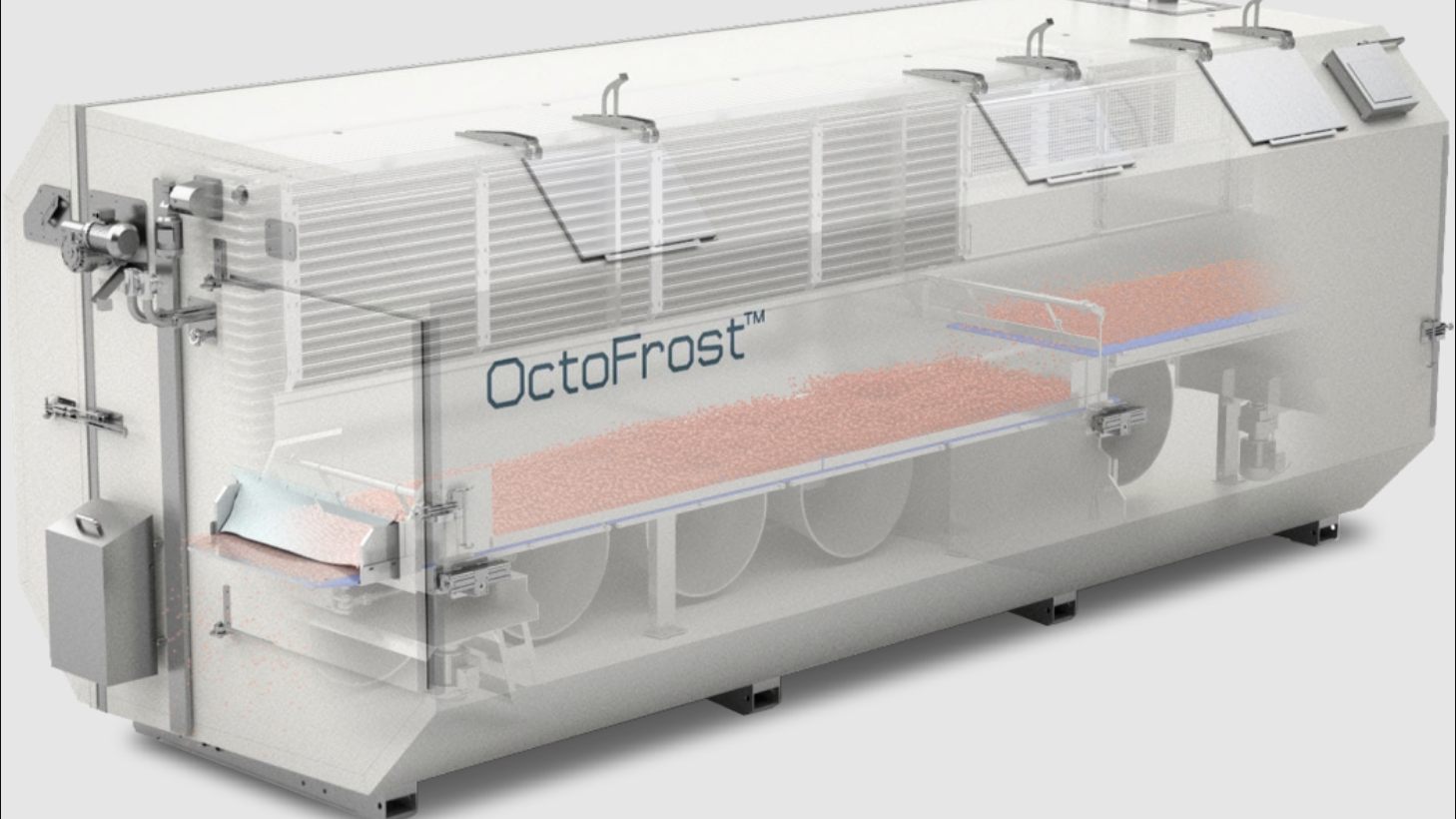
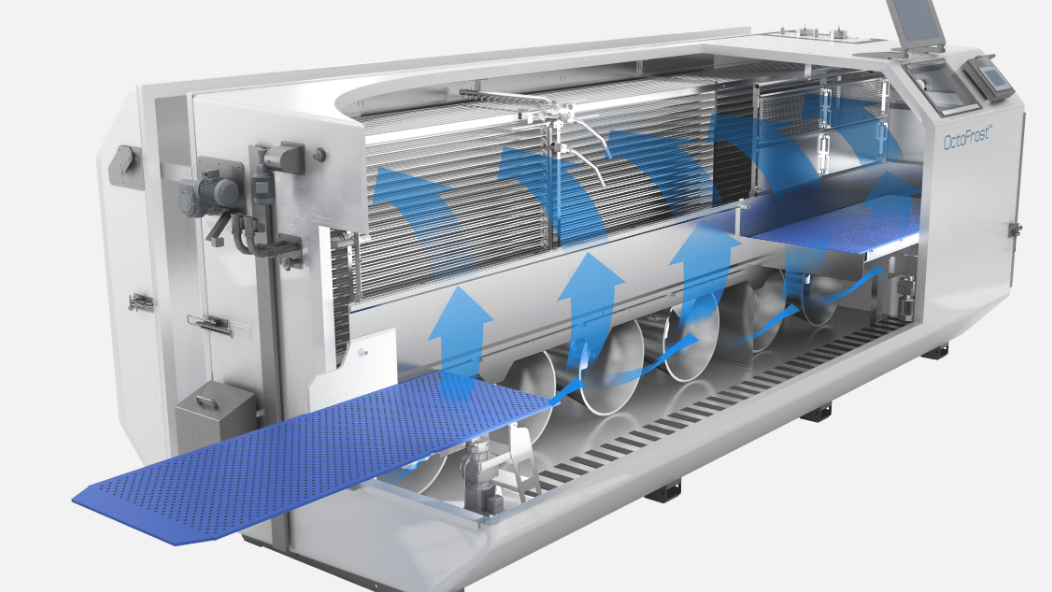
OctoFrost has been dedicated to the IQF sector for many years, building a comprehensive technology platform around aerodynamics, bed-plate structures, fan systems, and product movement dynamics. According to its publicly available technical information, conventional mesh belts may suffer from low utilization of the fluidization zone and difficulties in cleaning. To address these challenges, OctoFrost employs a patented perforated bed-plate design, using asymmetric movement to facilitate both product conveying and separation.
OctoFrost’s Core Fluidized Bed Technology Features
Its technology platform focuses primarily on precise control of the fluidization process:
- Patented perforated bed-plate structure;
- Multiple fluidization modes for precise process adjustment;
- Variable-frequency variable-speed axial fans;
- Independent airflow control by zone;
- Air velocity matched to specific product characteristics;
- Optimized bed-plate perforation size and airflow distribution;
- Quick-release bed-plate design for easier cleaning and maintenance.
OctoFrost divides the fluidization process into three stages: full fluidization, semi-fluidization, and fixed-bed operation, corresponding to changes in product conditions throughout the freezing process.
Its technological approach is therefore not simply about increasing air velocity. Instead, it focuses on the coordinated matching of product state, airflow parameters, bed-plate structure, and freezing zones to achieve more precise control of fluidization.
Overall Assessment
OctoFrost’s strongest technological differentiation lies in the integration of aerodynamic design + perforated bed-plate structures + variable-speed fan systems + product movement control. By adjusting fan speed to match the fluidization requirements of different products, the system can reduce ineffective air circulation and help lower energy consumption.
For projects focused on high-quality berries, fruits and vegetables, seafood, and other products with particularly demanding requirements for appearance and individual product separation, OctoFrost is widely regarded as a benchmark-level supplier in the industry.
OctoFrost website:https://octocore.com/about-us/
3. Yurnfreeze: A Specialized Chinese Manufacturer of Fluidized Bed Freezing Technology
Yurnfreeze is one of the few specialized industrial freezing equipment manufacturers in China with expertise in advanced European and American freezing technologies. Its product portfolio covers a comprehensive range of freezing systems, including fluidized bed freezers, spiral freezers, tunnel freezers, and plate freezers.
Within the fluidized bed segment, Yurnfreeze primarily serves IQF products such as berries, diced fruits and vegetables, shrimp, and other small-sized or fragile products. Its R&D efforts focus on four key areas: airflow organization, fluidization control, product separation, and freezing uniformity.
Yurnfreeze’s Core Fluidized Bed Technology Features
(1) Optimized Airflow Structure for Gentle Fluidization
Yurnfreeze independently optimizes its airflow structure and air distribution based on proven international fluidization technology approaches. The system enables cold air to penetrate the product layer evenly, improving heat transfer and freezing efficiency while avoiding excessive product collision and damage caused by overly aggressive airflow.
This approach is particularly suitable for fragile products such as berries, diced fruits and vegetables, and small seafood products.
(2) Pulsed-Air Technology for Enhanced Individual Product Separation
Yurnfreeze employs Pulsed-Air technology to dynamically regulate product movement within the freezing zone, improving individual product separation and reducing localized accumulation and sticking.
At the same time, the technology reduces excessive agitation of lightweight products caused by continuous high-velocity airflow, helping improve the integrity and individual separation of finished IQF products.
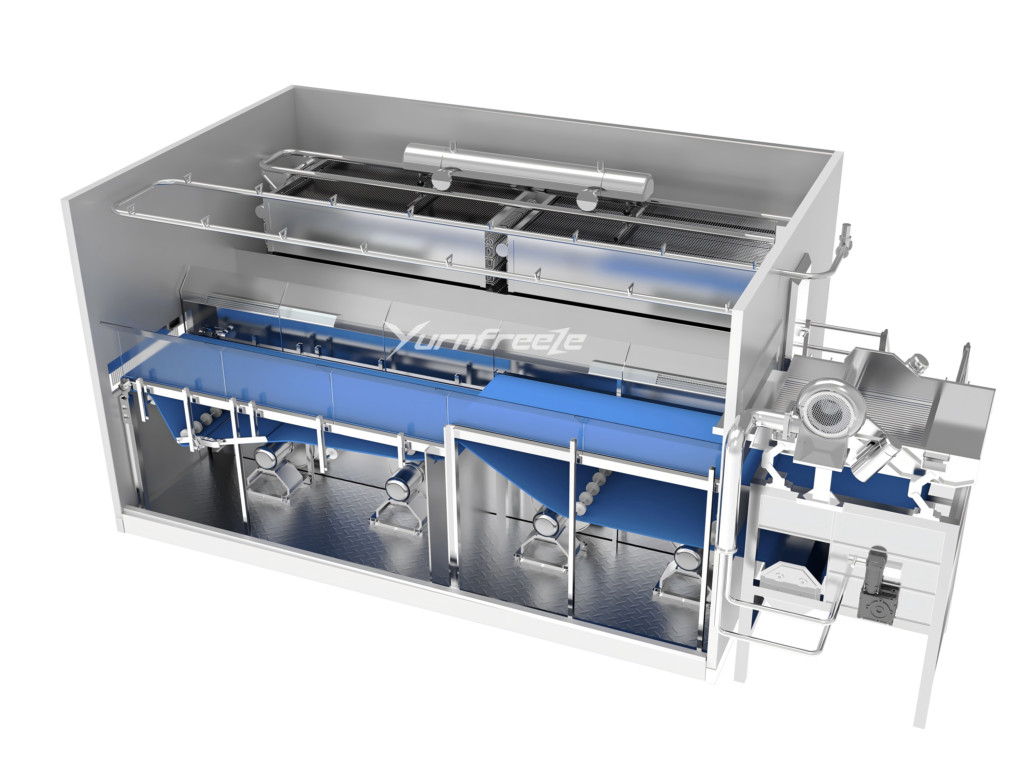
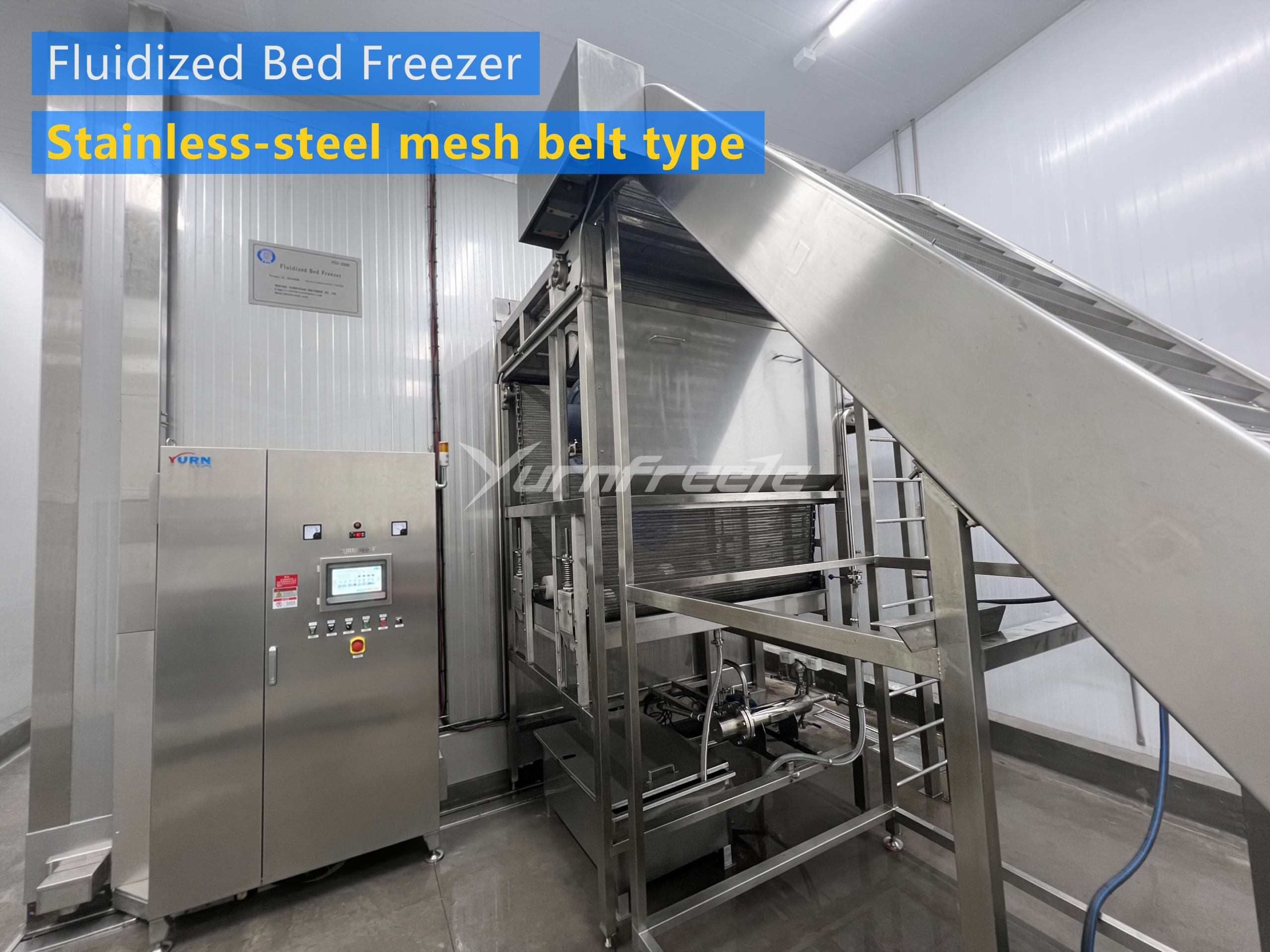
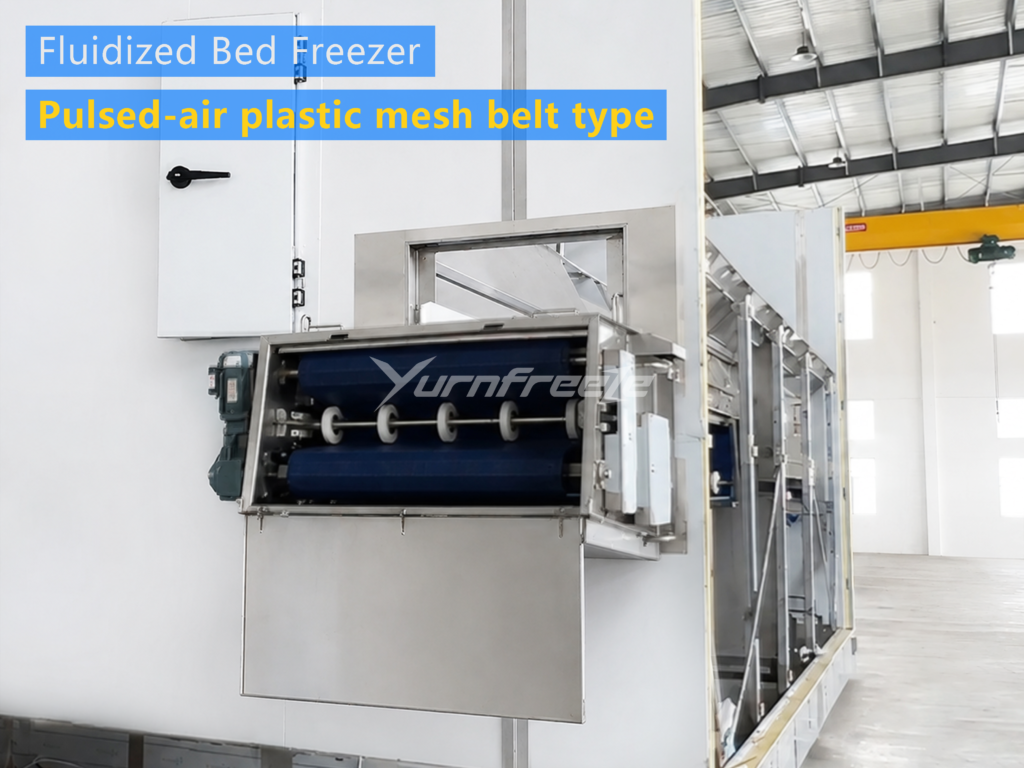
(3) Three Major Fluidized Bed Configurations for Diverse Applications
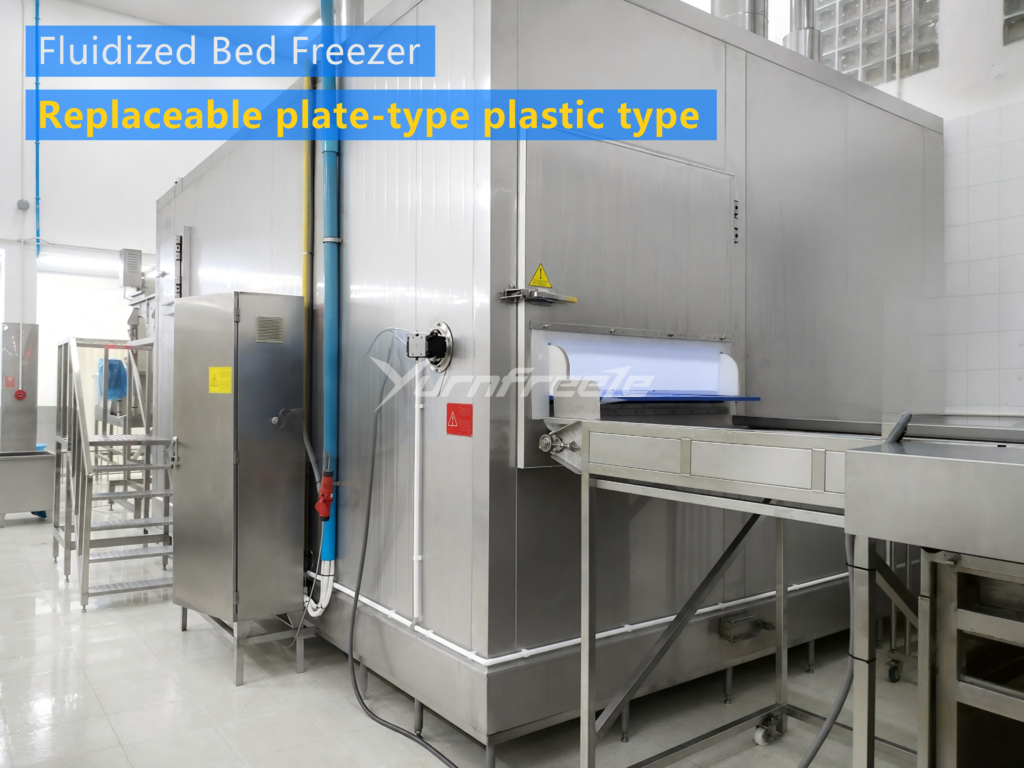
This represents one of Yurnfreeze’s key differentiating advantages. The company offers three mainstream fluidized bed configurations, allowing equipment to be selected according to product size, shape, moisture content, and processing conditions. This provides an optimized balance between product adaptability, hygienic design, and configuration flexibility:
- Stainless-steel mesh belt type: Suitable for conventional fruit, vegetable, and seafood processing, offering durable construction and relatively low maintenance costs;
- Pulsed-air plastic mesh belt type: Provides gentler fluidization and lower product damage rates, making it suitable for high-value, thin-skinned berries;
- Replaceable plate-type plastic configuration: Features a modular quick-release design for efficient cleaning and is well suited to intermittent production involving multiple SKUs.
(4) Integrated System Design from Feeding to Freezing
Yurnfreeze treats uniform feeding, product distribution, airflow control, and fluidized freezing as an integrated continuous process. By maintaining a stable product layer thickness and matching airflow parameters appropriately, the system improves freezing uniformity and product separation.
This design is particularly suitable for IQF processing applications with stringent requirements for product quality, appearance, and moisture loss control.
Overall Assessment
From a technology perspective, Yurnfreeze continues to develop its fluidized bed solutions around airflow structure optimization, Pulsed-Air separation, and multi-configuration adaptability, enabling customized equipment solutions for different IQF products.
In the global fluidized bed freezer market, Yurnfreeze can be positioned as a specialized manufacturer that combines fluidization technology and aerodynamics with strong engineering customization and system integration capabilities.
Its stainless-steel and plastic mesh belt fluidized bed series have already been deployed in multiple commercial projects in Peru, South America, Southeast Asia, and other regions, with long-term continuous operating stability validated by leading customers.
For food processors seeking to achieve an optimal balance among fluidization performance, product quality, equipment configuration, and capital investment, Yurnfreeze represents a highly competitive option among global suppliers.
Yurnfreeze website: https://yurnfreeze.com/
4. Unidex: A Regional Fluidized Bed Equipment Manufacturer with Deep Roots in Central and Eastern Europe
Unidex is a Polish food processing equipment manufacturer established in 1992. Its product portfolio includes IQF fluidized freezing tunnels, compact IQF systems, spiral tunnels, and air-fluidization equipment.
Unidex’s Fluidized Bed Technology Features
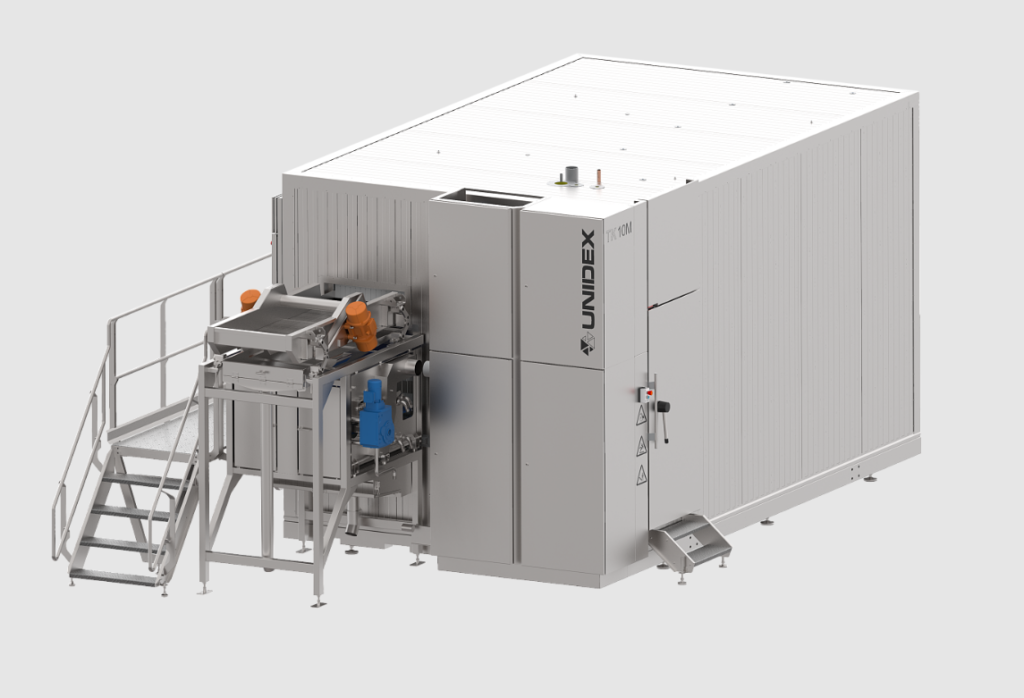
Unidex’s fluidized freezing tunnels use fans to force cold air upward through the evaporator and perforated conveyor belt, causing the products to enter a fluidized state.
The equipment is primarily designed for products such as fruits, vegetables, mushrooms, seafood, herbs, and small meat products. Its core operating principle is consistent with mainstream IQF fluidized bed technology: airflow is used to separate individual products and maintain their individual state throughout the freezing process.
Overall Assessment
Unidex’s key strengths lie in its combination of local Polish engineering experience + regional product customization + suitability for small- and medium-sized projects.
For food processors in Poland and Central and Eastern Europe, its local supply chain, engineering services, and long-term regional project experience provide clear localized value.
However, compared with globally established specialized brands such as JBT and OctoFrost, Unidex has relatively limited global technological influence, international project scale, and worldwide brand presence.
From the perspective of a global supplier comparison, Unidex is better characterized as a regional specialized manufacturer rather than a globally scaled IQF technology platform company.
Unidex website:https://unidex.pl/en
5. Square Technology: A Comprehensive Freezing Equipment Manufacturer with a Full-Range Product Portfolio
Square Technology is a comprehensive Chinese manufacturer of industrial refrigeration and food processing equipment, with a business portfolio covering IQF freezers, spiral freezers, tunnel freezers, refrigeration systems, and supporting food processing equipment.
Its fluidized bed freezer portfolio includes both semi-fluidized and fully fluidized models, designed for a wide range of products, including fruits and vegetables, meat, poultry, seafood, dairy products, and other food products.
Square Technology’s Fluidized Bed Technology Features
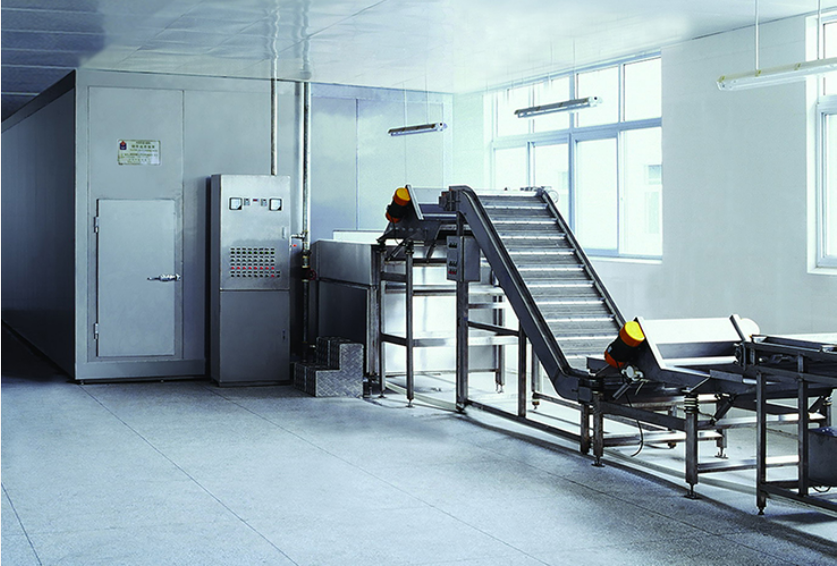
Square uses an upward-flowing stream of cold air to fluidize the products, enabling individual product separation and rapid freezing.
According to publicly available information, its fluidized bed equipment incorporates a new refrigerant/liquid supply method, which is designed to improve heat transfer performance compared with conventional configurations.
From the perspective of its overall product portfolio, Square Technology demonstrates strong integrated manufacturing capabilities and has certain advantages in comprehensive food processing projects that require a broad range of supporting equipment and systems.
Overall Assessment
Square Technology’s publicly presented fluidized bed technology focuses primarily on mature industrial manufacturing, heat transfer performance, product coverage, and comprehensive system integration capabilities. Compared across the five manufacturers, Square has the largest overall manufacturing footprint, an early entry into the industry, deep industrial experience, a broad full-range equipment portfolio, and strong large-scale manufacturing capabilities.
However, if the evaluation focuses specifically on innovation in core fluidization structures, precision aerodynamic control, and the pace of specialized IQF technology development, Square’s differentiation in specialized technology innovation is relatively less pronounced compared with manufacturers that are highly focused on fluidization R&D. Fluidized bed freezing is not its primary area of specialization.
Square Technology website:https://en.ntsquare.com/product/fluidized-bed-freezer/
Conclusion
Fluidized bed freezers have long evolved beyond simple “cold-air rapid freezing equipment” into highly integrated technology systems that rely heavily on aerodynamics, heat transfer, product movement, and automated process control.
Looking at the differentiated positioning of leading global manufacturers:
- JBT stands out for its long-standing IQF technology expertise, extensive global engineering experience, and comprehensive project delivery capabilities for large-scale food processing operations.
- OctoFrost has an exceptionally high level of specialization in the fluidized bed segment, with strong technological differentiation in perforated bed plates, airflow control, and aerodynamic design.
- Yurnfreeze, as a rapidly growing specialized IQF fluidized bed manufacturer, continues to optimize airflow structure, Pulsed-Air technology, product separation, and multi-configuration solutions. It offers three mature configurations—stainless-steel mesh belt, plastic mesh belt, and plate-type plastic systems—and demonstrates strong competitiveness in equipment customization, product adaptability, and engineering configuration flexibility, supported by extensive project experience in South America and Southeast Asia.
- Unidex has a solid foundation in the Central and Eastern European regional market and substantial experience with fluidized freezing equipment, but its overall market scale and global engineering network remain relatively regionally focused.
- Square Technology benefits from a large manufacturing base and strong comprehensive equipment integration capabilities. However, in terms of publicly demonstrated innovation in core fluidization technology, there are certain differences compared with manufacturers that focus more exclusively on the IQF segment.
Therefore, there is no absolute “best” fluidized bed freezer manufacturer in the industry.
For food processing companies, the key is to identify a technology solution that closely matches their product characteristics, production capacity, freezing process, energy-efficiency targets, hygienic requirements, and investment budget.
From this perspective, a manufacturer’s technology approach, engineering experience, and understanding of specific product-processing requirements are often more practically valuable than a simple brand ranking.
Fluidized Bed Freezer Technical Comparison Matrix
Manufacturer | Capacity Range (per hour) | Full CIP Cleaning Time | Applicable Core Products | Energy Efficiency Rating (1-5) |
JBT Frigoscandia | 1,000 – 8,000 kg (customizable for large-scale lines) | 3.5 – 5 hours | Whole-spectrum IQF products: peas, corn, berries, diced vegetables, seafood, prepared foods; ideal for standardized high-capacity production | ★★★☆☆ Mainstream industrial level; total energy consumption is high for large systems, while unit product efficiency stays at industry average |
OctoFrost | 500 – 5,000 kg (premium precision lines) | 1.5 – 2.5 hours | High-value berries, premium diced fruits & vegetables, high-end seafood; products with strict requirements for appearance and individual separation | ★★★★★ Industry-leading; variable-speed zoned fans + patented airflow structure minimize ineffective air circulation and reduce unit energy consumption |
Yurnfreeze | 300 – 8,000 kg (multi-configurable for small to medium-large lines) | 2 – 3 hours | Berries, diced fruits & vegetables, shrimp, fragile small-sized seafood; covers both conventional and high-value IQF products | ★★★★☆ Above industry average; pulsed-air technology + optimized airflow organization reduce redundant energy loss while ensuring fluidization effect |
Unidex | 200 – 3,000 kg (focused on small & medium CEE projects) | 2.5 – 4 hours | Regular fruits & vegetables, mushrooms, herbs, small meat products; adapted to local mainstream food categories in Central & Eastern Europe | ★★★☆☆ Moderate industrial level; practical regional design with no specialized energy-saving optimization |
Square Technology | 500 – 7,000 kg (wide-range full-category lines) | 2.5 – 3.5 hours | Full food categories: fruits & vegetables, meat & poultry, seafood, dairy; suitable for comprehensive processing plants with diverse SKUs | ★★★☆☆ Standard industrial level; meets general energy consumption specifications, no targeted fluidization energy efficiency upgrade |
| Note: The above data is sorted based on publicly available technical documents and typical commercial project configurations. Actual parameters will vary with custom design, product characteristics, and freezing process requirements. |
Frequently Asked Questions About Fluidized Bed Freezers
1. How to choose between a mesh belt and a plate-type fluidized bed freezer?
The choice depends on your product type, production mode, and hygiene requirements:
Stainless steel mesh belt type: Recommended for continuous large-batch production of conventional fruits, vegetables and seafood. It features high durability, low maintenance cost and strong load capacity, and is suitable for long-term stable operation of single SKU.
Pulsed-air plastic mesh belt type: Preferred for high-value thin-skinned berries and fragile diced products. It delivers gentler fluidization with lower product damage rate, and can effectively maintain the integrity and appearance of finished products.
Replaceable plate-type plastic configuration: Ideal for multi-SKU intermittent production and scenarios with strict food safety requirements. Its modular quick-release design greatly shortens cleaning and switching time, and reduces cross-contamination risks between different products.
2. What is the typical ROI for an IQF fluidized bed freezer?
The return on investment cycle typically ranges from 2.5 to 5 years, depending on three core factors:
Product added value: High-value products such as premium berries, IQF seafood and specialty diced fruits can achieve faster payback due to higher profit per unit.
Capacity utilization: For production lines running at over 70% load for a long time, the cost per unit product drops significantly, and the ROI cycle can be shortened to 2–3 years.
Energy and labor cost savings: High-efficiency fluidized bed equipment reduces product loss, lowers manual sorting workload and cuts energy consumption per unit output, which will continuously generate cost savings throughout the equipment lifecycle.
3. What products are most suitable for fluidized bed IQF freezers?
Fluidized bed freezers perform best for small-sized, granular or diced products that require individual separation, including:
Vegetables: peas, sweet corn, diced carrots, green beans, diced bell peppers
Fruits & berries: strawberries, blueberries, raspberries, diced mango, diced apple
Seafood: shrimp, small shellfish, diced fish
Other categories: diced meat, herb particles, prepared food granules
Products that are oversized, highly sticky or extremely fragile are not recommended for standalone fluidized bed freezing.
4. How much energy does a fluidized bed freezer consume compared to a regular tunnel freezer?
Under the same capacity and freezing temperature conditions:
Standard fluidized bed freezers have 15%–30% higher instantaneous energy consumption than ordinary tunnel freezers, due to the high-power fan system required to maintain the fluidized state.
However, fluidized bed freezing has faster freezing speed and higher heat transfer efficiency, resulting in shorter product residence time and lower unit product energy consumption.
For high-efficiency models with zoned variable-speed fans and optimized airflow structures, the comprehensive energy consumption per kilogram of product can be 5%–15% lower than that of conventional tunnel freezers.
5. How often should a fluidized bed freezer be cleaned and maintained?
Cleaning and maintenance frequency should be formulated according to product type and production rhythm:
Routine cleaning: For single-category continuous production, full CIP cleaning is recommended every 7–14 days; for multi-SKU switching production, thorough cleaning must be carried out for each product switch.
Daily maintenance: Check fan operation, belt tension and evaporator frosting status every day before startup.
Quarterly maintenance: Conduct comprehensive inspection of refrigeration system, electrical control system and air duct sealing performance.
Annual overhaul: Carry out full disassembly inspection, parts replacement and performance calibration to ensure long-term stable operation of the equipment.
6. What certifications should I look for when purchasing a fluidized bed freezer for export food production?
For export-oriented food processing lines, the following core certifications are essential entry thresholds:
CE certification: Mandatory for access to the European Economic Area market, covering equipment safety, health and environmental protection requirements.
HACCP compliance: Equipment design must meet food safety hazard analysis and critical control point requirements, which is a basic requirement for global food export.
ISO 22000: Food safety management system certification, which proves that the equipment meets international food safety production standards.
For the North American market, equipment that meets FDA food contact material standards should be selected; for projects with pressure vessel requirements, ASME standard certification is also required.
For food processors evaluating fluidized bed freezers, …