
1. What Is IQF Freezing?
IQF (Individual Quick Freezing) is a food processing technology that freezes individual food pieces separately while maintaining their physical integrity and minimizing adhesion between particles. It is widely used for vegetables, fruits, seafood, meat, and selected prepared food products.
Unlike conventional freezing methods that freeze large quantities of food together as a single mass, IQF focuses not only on reducing product temperature but also on preventing individual pieces from sticking together. This helps maintain product separation after freezing, making subsequent packaging, portioning, and processing easier.
From an engineering perspective, IQF performance depends on several factors, including food characteristics, initial product temperature, particle size, loading density, airflow distribution, and freezing time. Fluidized bed, mesh belt tunnel, and spiral freezers can all be used for different food applications, but they differ in heat transfer mechanisms, product conveying methods, and suitable product types.
2. Three Fundamental Heat Transfer Mechanisms
Food freezing is essentially a continuous process of transferring heat from the product to a low-temperature environment. Convection, conduction, and radiation are the three fundamental mechanisms used to describe this heat transfer process.
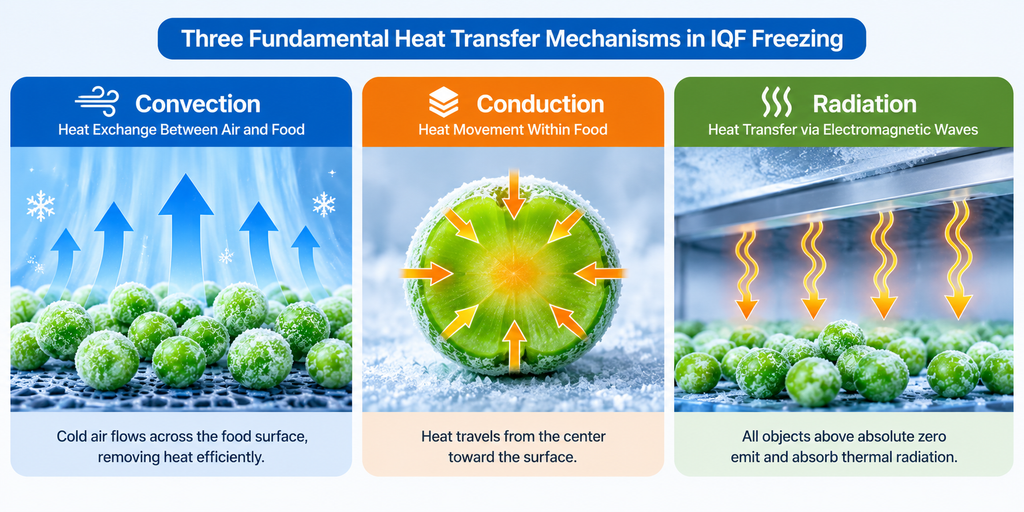
2.1 Convective Heat Transfer: Heat Exchange Between Air and Food
In most forced-air IQF systems, convection is one of the primary mechanisms responsible for heat exchange between the food surface and the surrounding cold air.
As low-temperature air flows across the product surface, it removes heat released by the food. Heat transfer performance is influenced by airflow velocity, air temperature, turbulence, and the degree of contact between the air and the product surface.
Fluidized bed freezers typically use upward airflow to loosen or fluidize suitably sized food particles, increasing their exposure to cold air. These systems are commonly used for products such as peas, corn kernels, blueberries, and diced vegetables.
For example, Yurnfreeze fluidized bed IQF freezers use zoned airflow and conveyor belt configurations to organize air circulation across different freezing stages. Similar engineering approaches can also be found in fluidized bed systems offered by manufacturers such as OctoFrost.
However, actual freezing performance must still be evaluated based on product loading, particle distribution, and operating parameters. Equipment configuration alone is not sufficient to determine freezing efficiency.
2.2 Conductive Heat Transfer: Heat Movement Within Food
While convection describes heat exchange between the food surface and surrounding air, heat inside the product is transferred primarily through conduction toward the surface.
Food products typically consist of water, proteins, fats, carbohydrates, and other components. Their thermal properties are therefore not uniform. The cooling rate at the product center depends not only on air temperature but also on product thickness, moisture content, internal structure, and thermal conductivity.
For larger particles or thicker food products, the center may require considerably more time to reach the target temperature, even after the outer surface has frozen. This explains why freezing time cannot be determined solely by measuring surface temperature.
Contact plate freezers, on the other hand, transfer heat through direct contact between low-temperature metal plates and packaged food or products with regular shapes. Under suitable product conditions, this approach can achieve high heat transfer efficiency. However, its operating principle differs from that of air-based IQF systems, where forced convection plays the dominant role.
2.3 Radiative Heat Transfer: Present but Usually Secondary
All objects above absolute zero exchange energy through thermal radiation. In freezing equipment, radiative heat transfer also occurs between food products, evaporator surfaces, and the internal walls of the freezer.
However, in typical forced-air IQF systems, radiation is generally not a major heat removal mechanism. Engineering analysis focuses primarily on air-side convective heat transfer, internal heat conduction within the food, and the refrigeration system’s ability to continuously remove the transferred heat.
3. Ice Crystal Formation: A Critical Process in Freezing Quality
Food does not immediately turn entirely into ice once its temperature drops to 0°C. Most food products contain dissolved substances that lower their initial freezing point below the freezing point of pure water. As a result, water gradually freezes over a temperature range rather than undergoing a complete phase change at a single temperature.
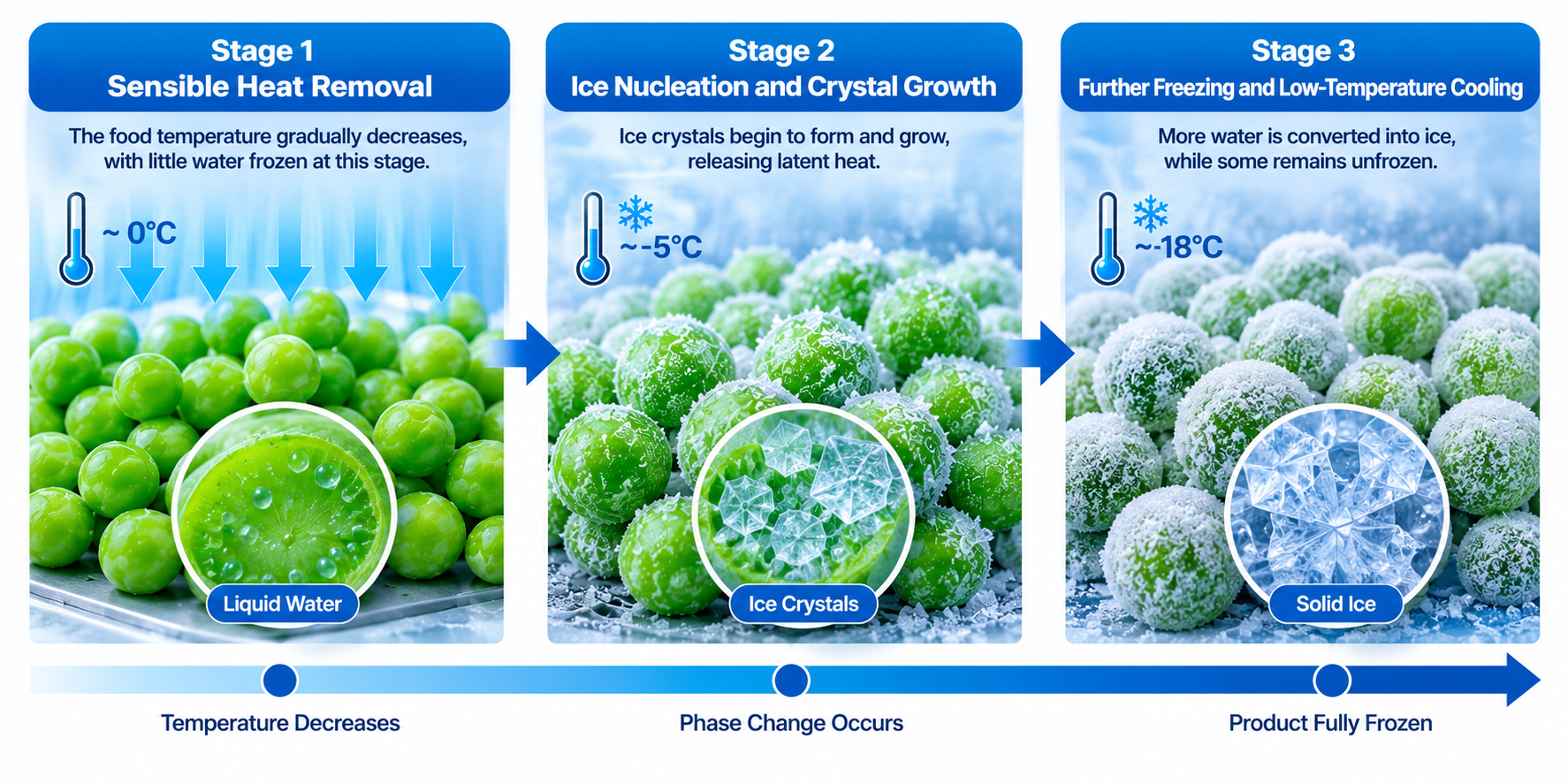
This process can be divided into three main stages.
Stage 1: Sensible Heat Removal
The food temperature gradually decreases, while relatively little water has frozen. Most of the heat removed during this stage is sensible heat released as the product temperature drops.
Stage 2: Ice Nucleation and Crystal Growth
When localized water reaches an appropriate supercooled state, ice crystals begin to nucleate and grow. The formation of ice releases latent heat associated with the phase change. Consequently, the temperature profile during freezing differs from that of ordinary cooling.
Stage 3: Further Freezing and Low-Temperature Cooling
As the temperature continues to decrease, more freezable water is converted into ice. However, some water remains unfrozen or bound within the food structure. The final product temperature should be determined according to the food type, processing requirements, and intended storage conditions.
Freezing rate has a significant influence on ice crystal size, quantity, and distribution. Under otherwise comparable conditions, faster freezing generally produces a greater number of smaller ice crystals, while slower freezing tends to promote the formation of larger crystals.
However, food composition, nucleation conditions, and the temperature profile throughout freezing also affect the final crystal structure.
4. Quick Freezing vs. Slow Freezing: How Does Food Microstructure Differ?
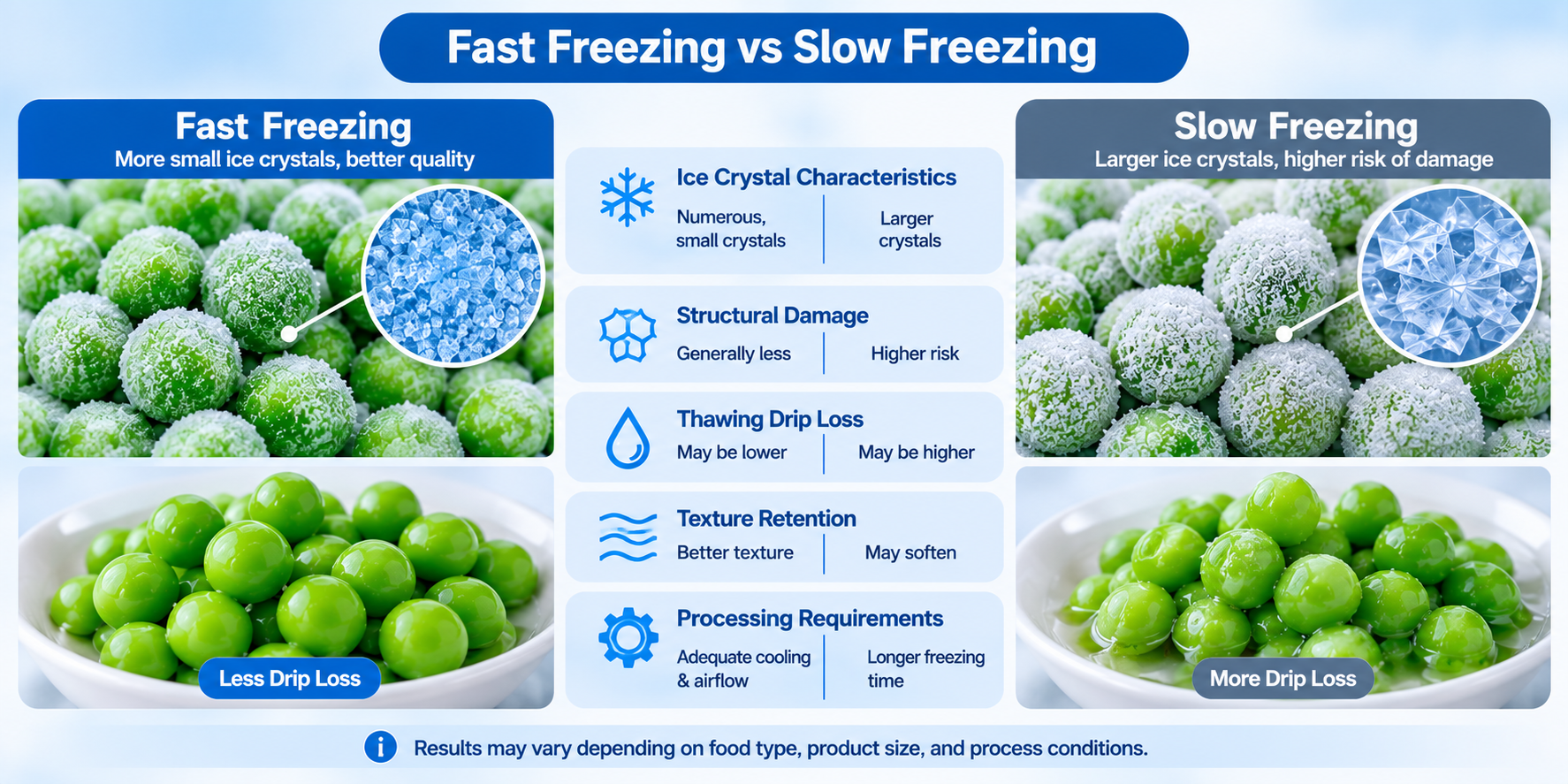
| Comparison Factor | Faster Freezing | Slower Freezing |
|---|---|---|
| Ice crystal characteristics | Generally produces more numerous, smaller ice crystals | More likely to produce larger ice crystals |
| Structural damage | Under suitable conditions, cellular damage is generally less significant | Larger ice crystals may increase the risk of cellular structural damage |
| Thawing drip loss | May be lower in certain food products | May be higher in certain food products |
| Texture retention | Generally more favorable for maintaining food texture | May result in more noticeable softening or structural changes |
| Processing requirements | Requires sufficient refrigeration capacity and appropriate airflow or contact conditions | Usually involves longer freezing times, with results depending on the specific process |
The comparisons above describe general trends rather than absolute outcomes applicable to every food product.
For example, differences in fruit cell structures, seafood protein characteristics, and meat muscle tissues can all influence freezing behavior and product quality after thawing.
Freezing rate is also not the only determining factor. Storage temperature fluctuations, frozen storage duration, and thawing methods can further affect the final product quality.
For IQF products, additional considerations include whether individual pieces stick together, whether they remain easy to separate after freezing, and whether excessive surface dehydration occurs.
These characteristics are related to the microscopic ice crystal structure, but they cannot be predicted accurately based on freezing time alone.
5. How Does Freezer Design Affect Heat Transfer?
Different IQF freezer configurations organize heat exchange between food products and the low-temperature environment in different ways.
Fluidized Bed Freezers:
These systems use upward airflow to loosen or fluidize suitably sized food particles. They are primarily used for rapidly freezing small individual products.
Mesh Belt Tunnel Freezers:
Products travel through low-temperature airflow zones on a conveyor belt. These systems are suitable for a wide range of continuous food processing applications. Actual freezing performance depends on product thickness, belt loading, and airflow distribution.
Spiral Freezers:
Spiral conveying systems extend the effective product travel path within the freezer, allowing continuous processing while minimizing floor space requirements.
Manufacturers such as JBT Frigoscandia and Yurnfreeze offer different configurations of IQF freezing equipment.
Taking fluidized bed IQF systems as an example, different manufacturers emphasize different engineering approaches:
– JBT Marel (Frigoscandia FLoFREEZE):
Uses design features such as dual-zone fluidization, pulsed airflow, and mechanical agitation. These systems are designed for a range of particulate fruits and vegetables, including products that tend to stick together during freezing.
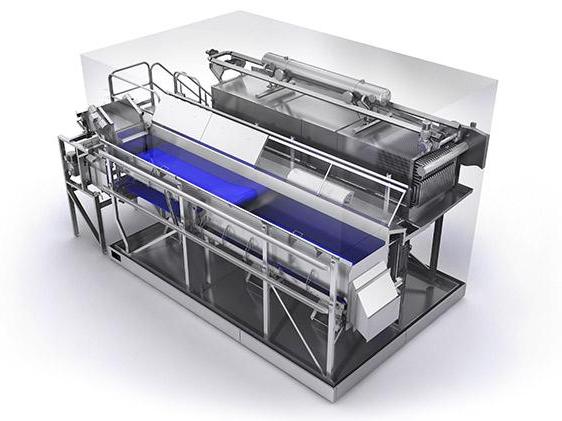
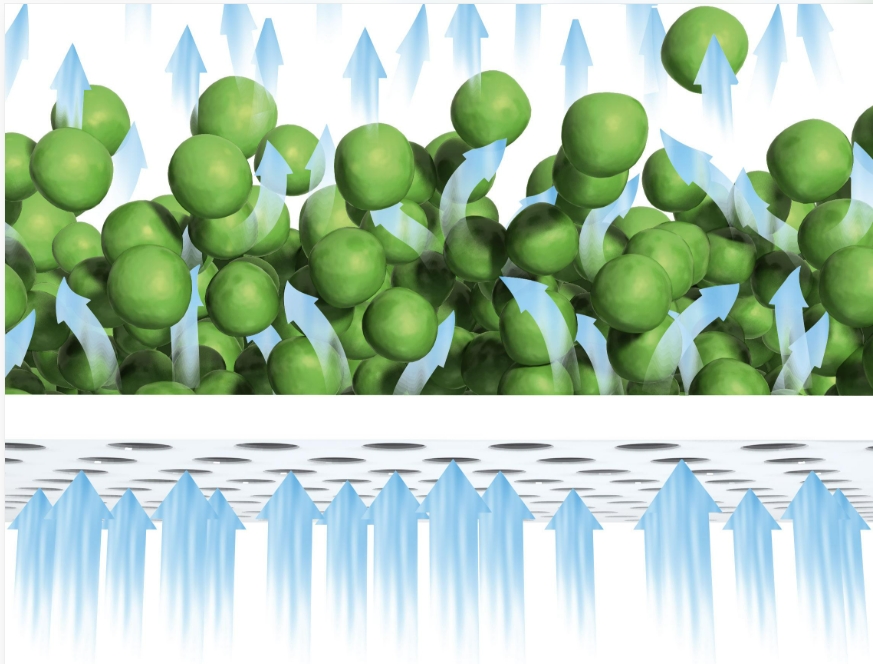
Offers fluidized bed configurations featuring plastic mesh belts with pulsed airflow, stainless steel mesh belts, and replaceable plate-type bed structures to accommodate different product freezing requirements.
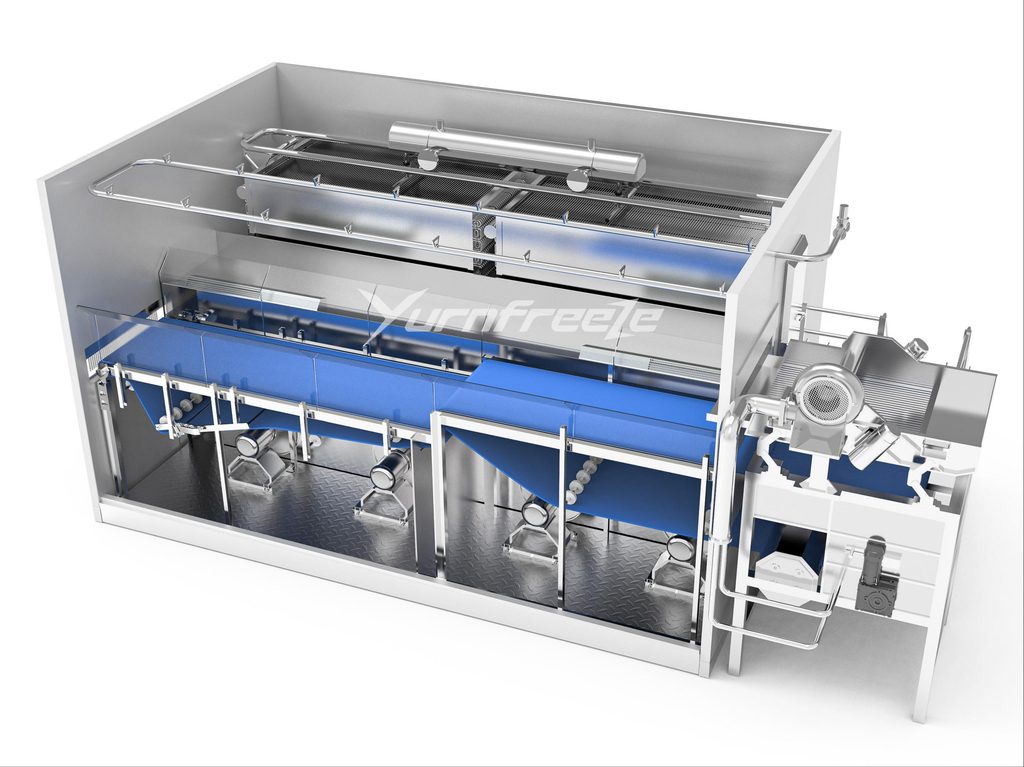
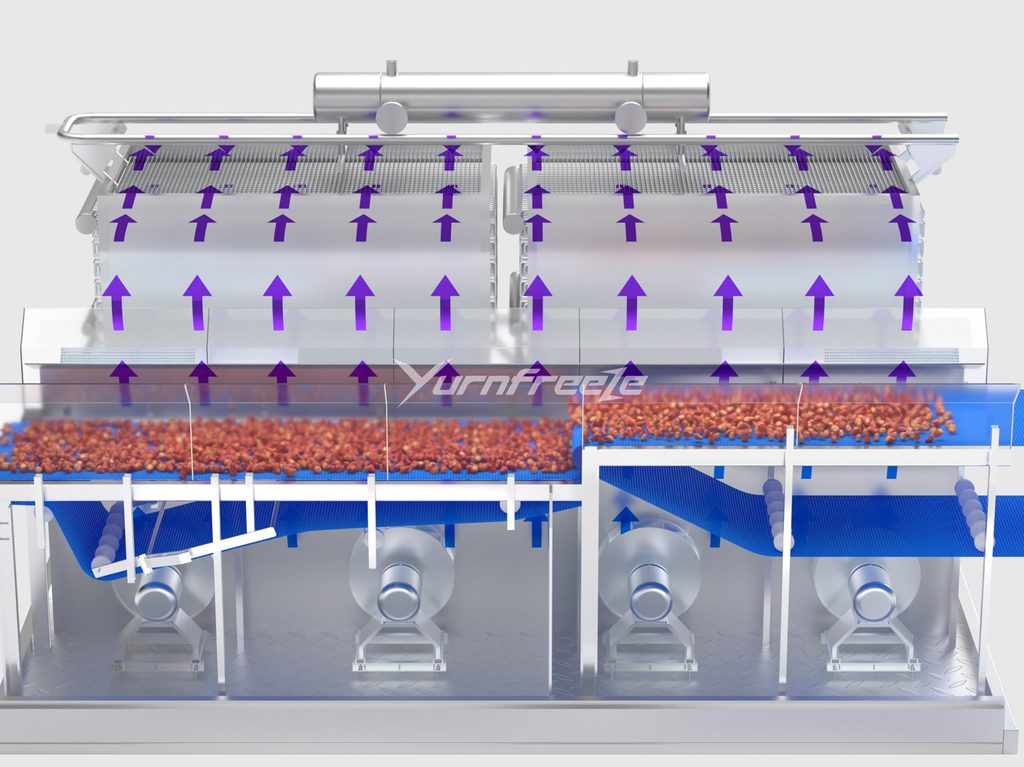
Emphasizes airflow management, zoned fan control, and removable bed plates, addressing both freezing performance and cleaning requirements.
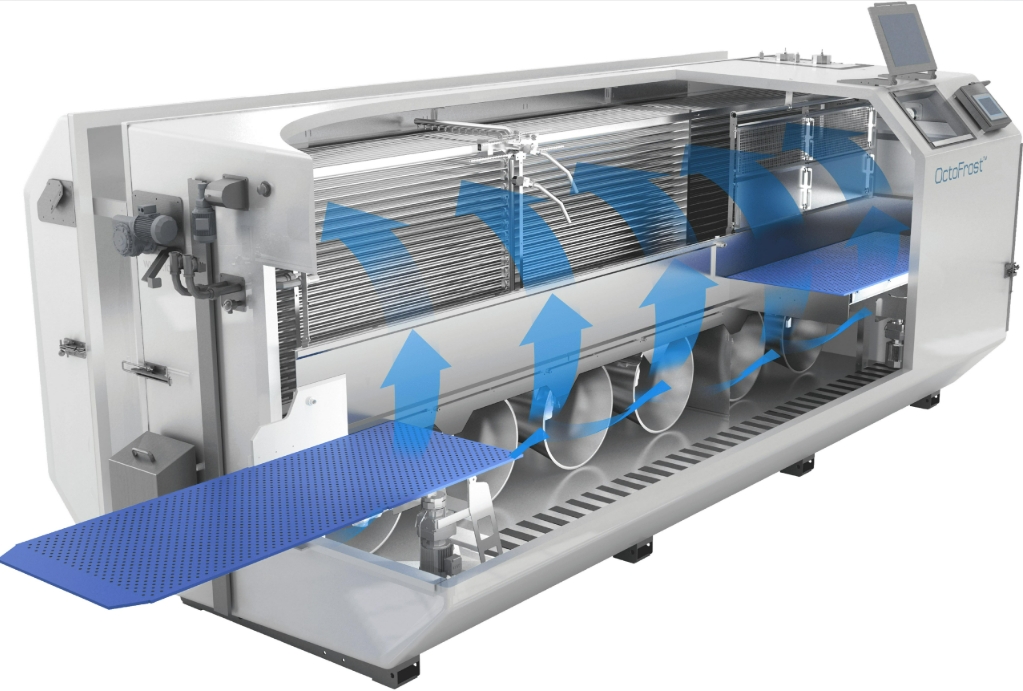
Specific configurations and application ranges vary by model. Equipment selection should therefore consider product dimensions, target processing capacity, required freezing time, hygienic cleaning requirements, available floor space, and energy consumption rather than relying solely on the lowest air temperature or rated throughput.
6. Conclusion
The fundamental principle of IQF is to control heat transfer between the interior and exterior of food products while achieving water freezing under an appropriate temperature profile.
Convection determines heat exchange between the food surface and cold air, conduction influences the cooling rate at the product center, and radiation generally plays a secondary role in conventional forced-air systems.
Ice crystal formation and growth further influence food microstructure, thawing drip loss, and texture retention. An appropriate freezing rate, uniform airflow distribution, and stable frozen storage conditions must work together to achieve the desired freezing results.
Therefore, understanding IQF requires more than simply examining freezer types or temperature settings. It involves a comprehensive understanding of heat transfer, phase change processes, and food microstructure.
FAQ
Q1. Does a lower IQF freezing temperature always result in better freezing performance?
Not necessarily. Freezing performance depends on product characteristics, freezing time, airflow distribution, and the target core temperature.
Simply lowering the cold air temperature does not necessarily improve product quality and may increase refrigeration energy consumption.
In actual production, freezing parameters should be determined according to the food type and specific processing requirements.
Q2. Why does the same IQF freezer have different processing capacities for different food products?
Different food products vary in size, moisture content, initial temperature, and internal structure. These differences affect the time required to reach the target freezing temperature, resulting in variations in actual processing capacity.
Equipment throughput should be evaluated based on the specific food product, feed conditions, loading density, freezing temperature, and target core temperature.
Rated capacities published by different manufacturers are only directly comparable when the testing conditions are consistent.
Q3. What parameters should be considered when selecting IQF equipment besides hourly processing capacity?
Several key factors should be evaluated:
- Product characteristics: Food type, dimensions, initial temperature, and moisture content.
- Freezing requirements: Target core temperature, allowable freezing time, and product quality specifications.
- Operating conditions: Actual throughput, refrigeration temperature, energy consumption, and production continuity.
- Hygiene and maintenance: Cleaning methods, defrosting intervals, equipment cleanability, and maintenance access.
These parameters collectively determine whether a freezer can meet actual production requirements. Rated processing capacity should never be the sole basis for equipment selection.